My Top 12 Best Autoblogging Tools in 2026 (Best AI Tools for Blogging)
After more than a decade of reviewing everything from bleeding-edge PC hardware to nascent software, I've seen countless tools promise to revolutionize content creation. Few deliver. Autoblogging and AI-assisted writing, however, have finally reached a point where they genuinely transform workflows, saving hundreds of hours and producing surprisingly high-quality content. But navigating this crowded market is tougher than ever. That’s why I spent the last few months personally testing dozens of platforms, running the same prompts, and pushing their features to the breaking point.
This isn't just another list. It's a hands-on, battle-tested guide to the best autoblogging tools in 2026. I'm cutting through the marketing hype to show you exactly which platforms work, who they're for, and how to get the most out of them. Whether you're a solo blogger trying to scale, a marketer needing to feed the content beast, or a business owner looking for an edge, the right tool can be a game-changer.
My goal is simple: help you find the perfect AI tool for your specific needs, fast. I’ve distilled my findings into concise summaries, complete with pros, cons, and real-world use cases. You'll find direct links and screenshots for every tool, allowing you to see exactly how they perform before you commit. We'll explore everything from one-click article generators like KoalaWriter to comprehensive SEO powerhouses like Surfer. Let's find the tool that will amplify your content strategy this year.
1. KoalaWriter
After testing dozens of AI writers over the years, KoalaWriter consistently earns its top spot. It's not just another GPT wrapper; it’s a purpose-built SEO content machine. Where other tools offer broad, general features, KoalaWriter is laser-focused on what affiliate marketers and niche site builders actually need: creating high-quality, long-form content at scale that’s designed to rank.
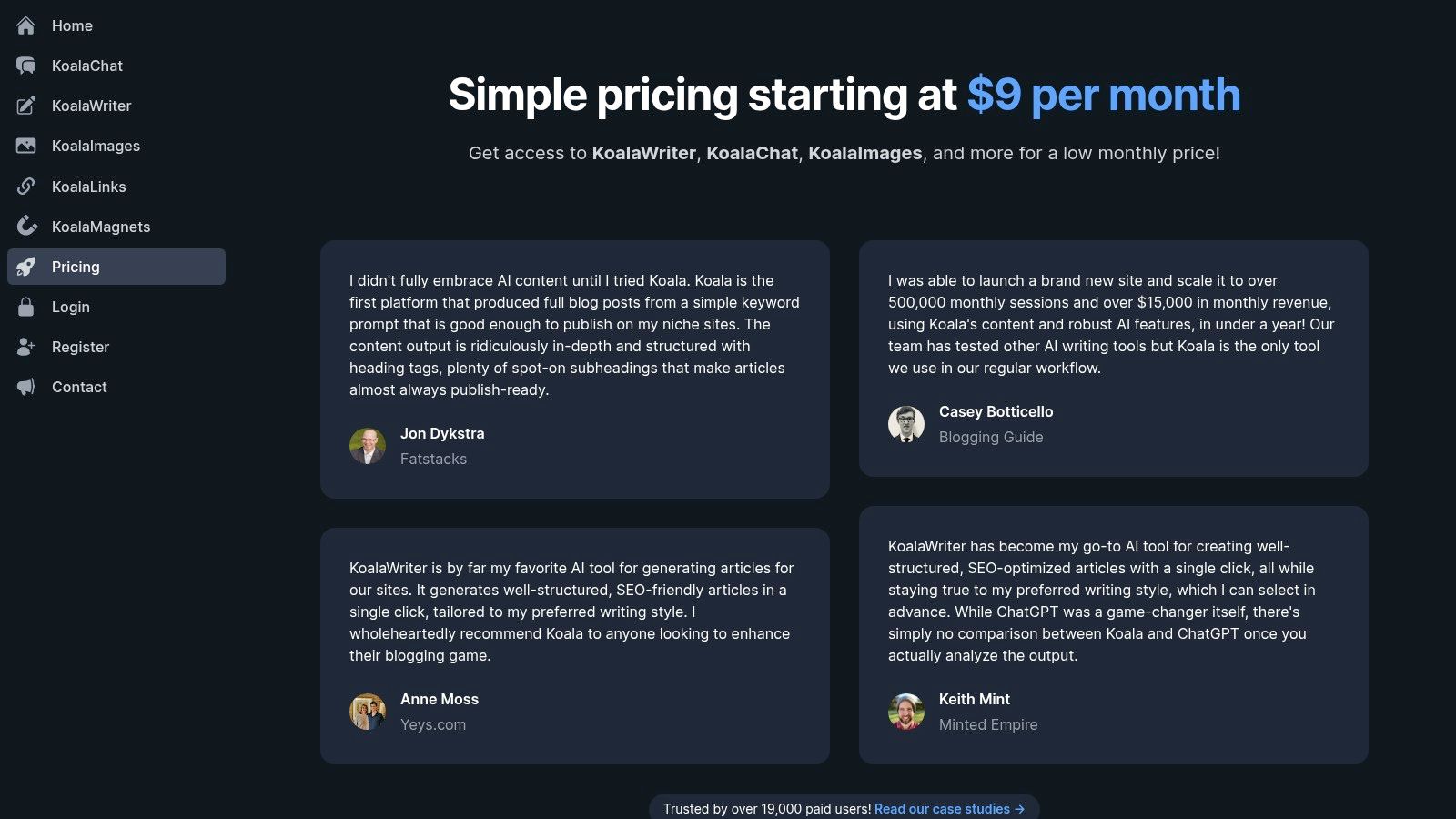
Its secret sauce is the "Live Amazon Data" feature for product roundups. Instead of scraping outdated info, it pulls real-time data directly from Amazon, which has been a game-changer for my affiliate articles, ensuring they’re always accurate. The bulk writing mode and direct-to-WordPress publishing integration create a nearly hands-off pipeline, making it one of the best autoblogging tools available today.
Key Details & Pricing
- Best For: Affiliate marketers, niche site builders, and anyone needing to produce SEO-optimized content in bulk.
- Standout Feature: Real-time Amazon data for product roundups and excellent first-draft quality that requires minimal editing.
- Pros: Purpose-built for SEO and autoblogging workflows; robust WordPress and webhook integrations; transparent word limits and LLM choices.
- Cons: Using higher-tier models like GPT-4o will burn through your word count faster, as they count 2x against your allowance.
- Pricing: Plans start around $9/month for 15,000 words and scale up based on volume.
Pro Tip: Use the KoalaLinks feature to automatically build an internal link network as you generate articles. It analyzes your entire site to find relevant link opportunities, saving hours of manual work.
Check out KoalaWriter here: https://koala.sh
2. Byword
Where many AI writers feel like creative assistants, Byword operates more like a programmatic SEO factory. After putting it through its paces for a large-scale topical map project, I can say it’s built for one thing: generating hundreds or even thousands of targeted articles with ruthless efficiency. It’s less about crafting a single masterpiece and more about establishing topical authority across an entire niche, making it an autoblogging powerhouse.
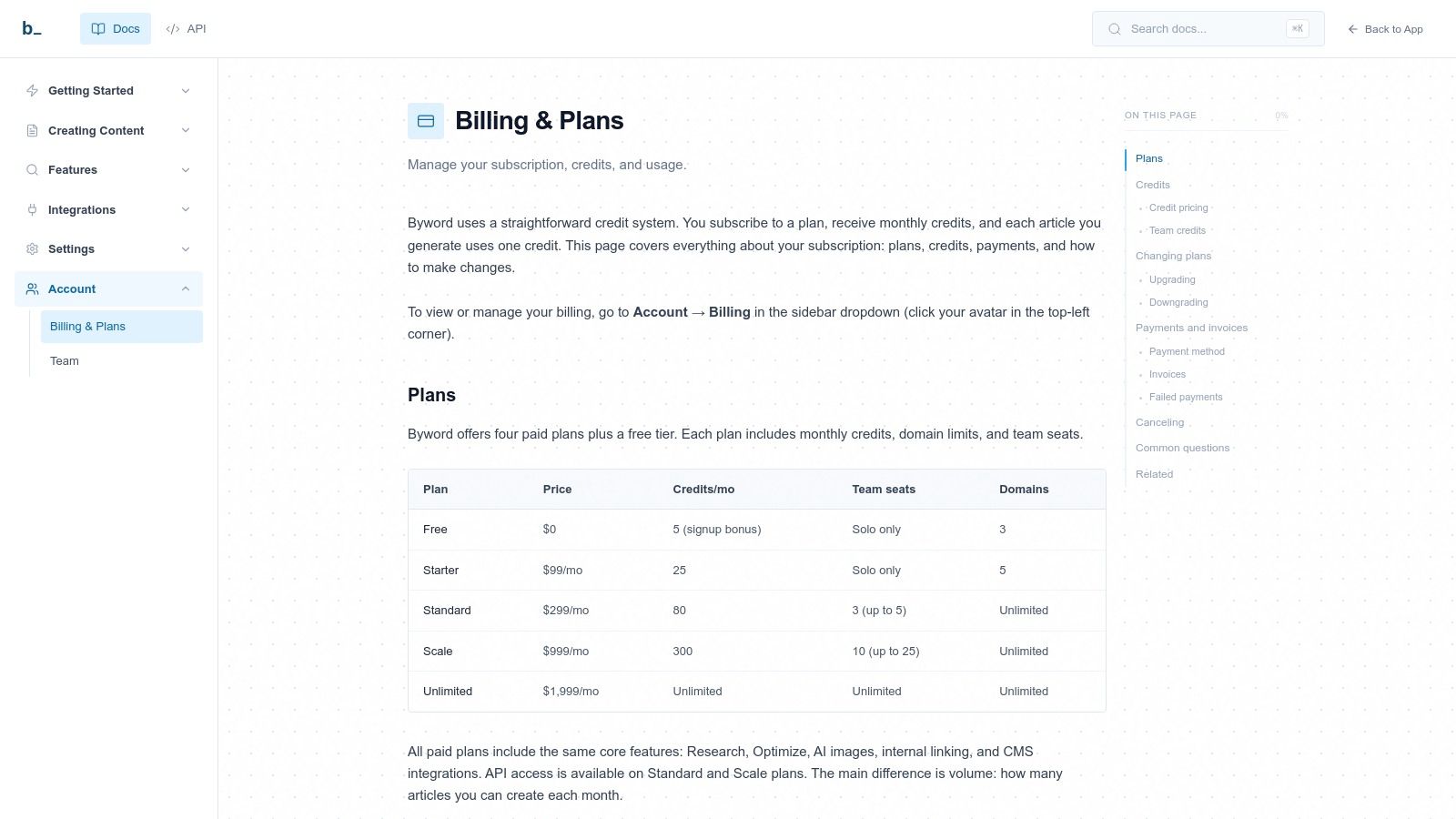
The platform shines with its bulk generation workflows and templating system, which lets you define a structure and then feed it a massive list of keywords. The optional auto-indexing feature is a massive time-saver for anyone managing huge sites. For those with technical chops, the self-serve, dedicated-server option using your own OpenAI API key provides ultimate control and cost-effectiveness, cementing its status as one of the best AI tools for blogging at an enterprise level.
Key Details & Pricing
- Best For: Programmatic SEO agencies, affiliate marketers building massive authority sites, and anyone needing to publish hundreds of articles at once.
- Standout Feature: The ability to generate and manage content at a massive scale using templates and bulk keyword lists, plus an optional auto-indexing service.
- Pros: Transparent per-article pricing with PAYG credits; enterprise-level options like dedicated servers or fully managed services.
- Cons: The per-article cost on the entry-level plan can be high for solo bloggers; setting up the self-serve option requires your own OpenAI API billing.
- Pricing: Pay-as-you-go credits, with plans that offer better per-article rates as you scale.
Pro Tip: Use Byword's "Title Generation" tool before committing to a large bulk run. It helps you quickly brainstorm and refine hundreds of article titles to ensure they align perfectly with your keyword strategy.
Check out Byword here: https://learn.byword.ai/get-started/plans?utm_source=openai
3. Autoblogging.ai
When a tool names itself Autoblogging.ai, it sets a high bar for expectations. After running hundreds of articles through its system, I can confirm it’s one of the most dedicated platforms for pure, high-volume content generation. It's less of an all-in-one AI writer and more of a specialized factory for cranking out blog posts, making it a strong contender among the best autoblogging tools.
What I find most effective is its range of article modes. You can choose "Quick" for fast, simple posts or switch to "Godlike" mode for more comprehensive, SERP-aware articles that analyze top-ranking competitors. Its bulk generator is where the magic happens for scaling a blog network, letting you queue up dozens of articles with built-in internal linking and AI image support, which then drip-feed directly to your WordPress sites.
Key Details & Pricing
- Best For: Publishers managing multiple sites, content agencies, and anyone needing a turnkey solution for high-volume article production.
- Standout Feature: The tiered "Article Modes" (Quick, Pro, Godlike) let you balance content quality and credit cost based on each article's importance.
- Pros: Purpose-built for autoblogging workflows at scale; robust WordPress integration and API access; offers high-volume annual and enterprise plans.
- Cons: The credit-based system can be confusing as costs vary by article mode and source, and the final output still needs a human touch-up for best results.
- Pricing: Plans are credit-based, starting around $49/month for 50 credits, with larger packages offering better value.
Pro Tip: Pair the platform's auto-generated content with a realistic AI voiceover for creating supplementary video or audio content. For those interested, you can explore some of the best AI voice tools for your projects to find a perfect match.
Check out Autoblogging.ai here: https://autoblogging.ai/samples/detailed-review-of-autoblogging-ai/?utm_source=openai
4. Article Forge
Article Forge has been on my radar for years, carving out its niche as one of the original one-click article generators. It’s designed for pure, unadulterated automation. While other tools have pivoted to complex feature sets, Article Forge remains dedicated to a simple premise: enter a keyword, set a length, and it will research, plan, and write a complete article for you. It’s a true “set it and forget it” system.
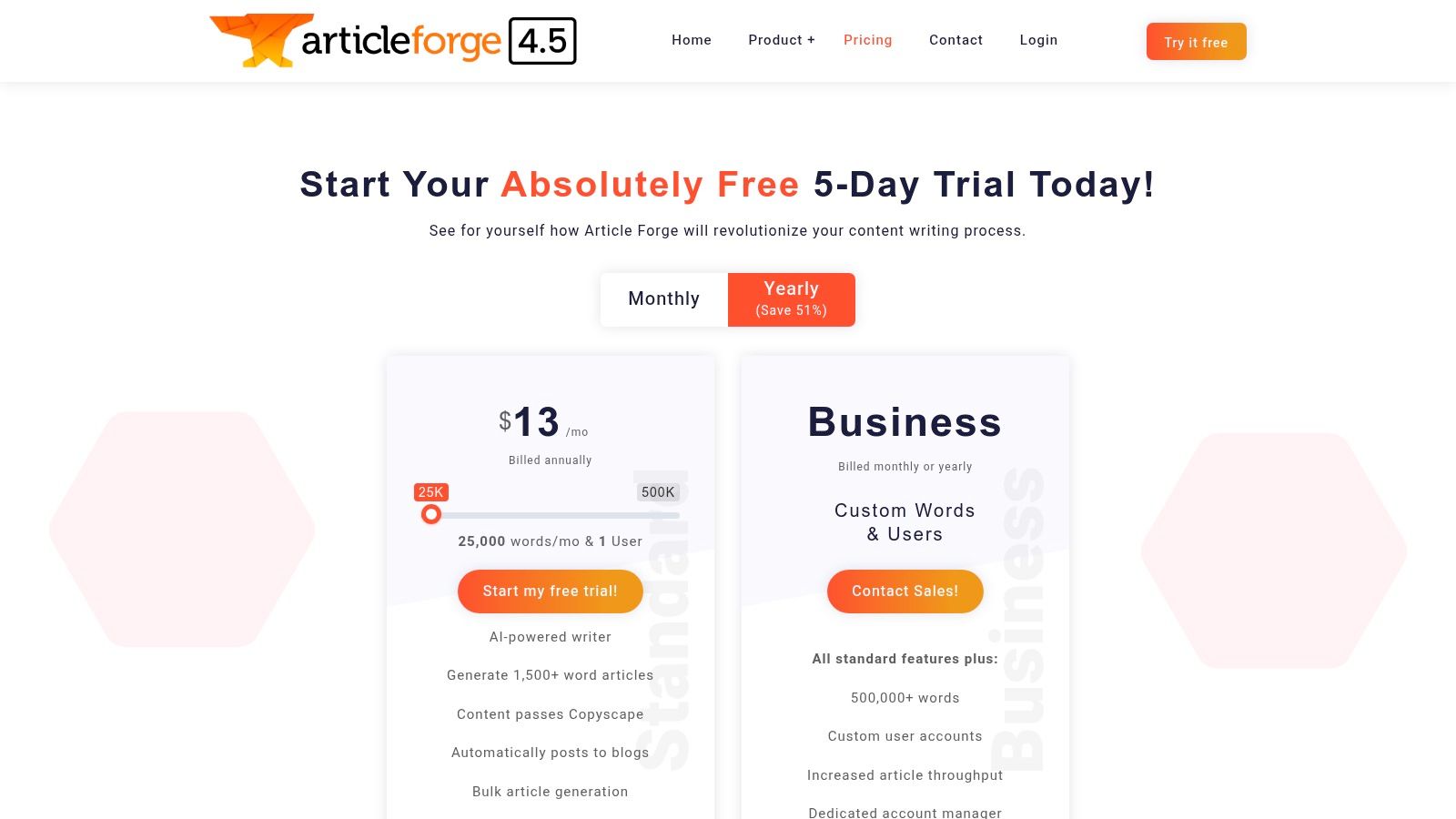
Its core strength lies in its bulk generation and direct-to-WordPress scheduling. I’ve used it to populate brand-new sites with foundational content, scheduling dozens of articles to drip out over several weeks. This hands-off approach makes it a valuable asset for anyone managing a large portfolio of sites or those who prioritize volume and speed over granular control. For teams wanting simple, repeatable autoblogging without heavy configuration, it remains a top contender.
Key Details & Pricing
- Best For: Content teams, PBN managers, and bloggers who need a high-volume, automated content pipeline with minimal manual input.
- Standout Feature: Fully automated article creation from a single keyword, including direct WordPress posting and scheduling features.
- Pros: Straightforward, blog-first workflow; generous annual word caps on base plans; powerful API for custom integrations.
- Cons: Content customization depth is lower than some advanced suites, and the best results still require editing and optimization.
- Pricing: Starts at $27/month for 25,000 words, with a 5-day free trial and a 30-day money-back guarantee.
Pro Tip: Use the "Post Scheduler" feature to create an entire content calendar in one session. You can generate 10-20 articles in bulk and set them to auto-publish to different WordPress sites over the coming months.
Check out Article Forge here: https://www.articleforge.com/pricing?utm_source=openai
5. Jasper
Jasper has evolved significantly from its early days, positioning itself as a robust AI marketing platform for teams rather than just a solo creator's tool. In my experience testing enterprise software, its strength lies in creating a controlled, on-brand content ecosystem. It’s less about one-click article generation and more about building a standardized content pipeline that a whole team can use, making it one of the best AI tools for blogging within larger organizations.
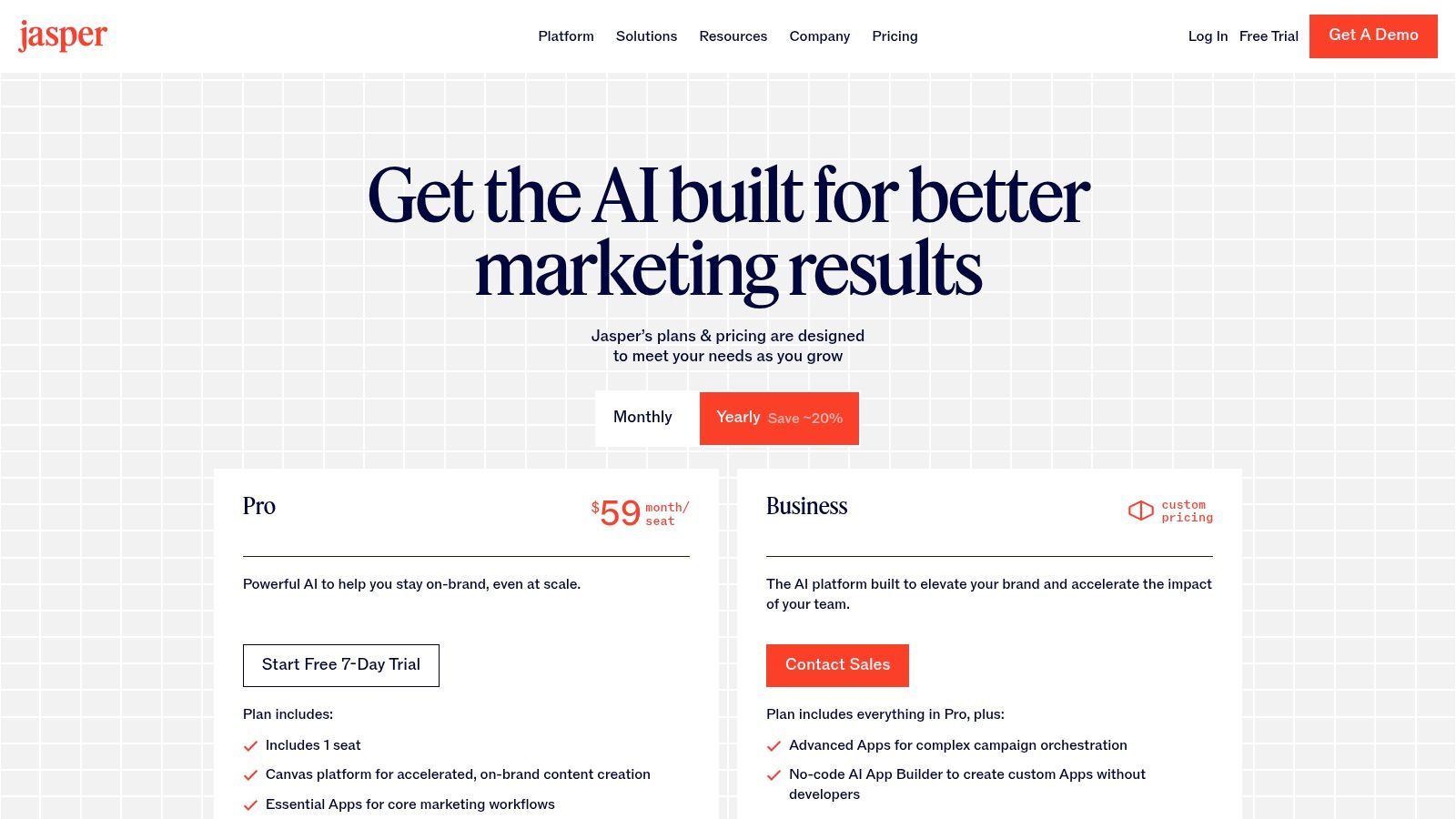
The platform's standout features are built for scale: Brand Voices, a comprehensive Knowledge Base, and style guides ensure every piece of content, from a blog post to social copy, remains consistent. Using the Canvas workspace feels like a collaborative whiteboard where you can map out and execute entire campaigns. This governance-first approach is what separates it from more agile, pure-play autoblogging tools.
Key Details & Pricing
- Best For: Marketing teams, agencies, and enterprise users managing content across multiple brands or websites.
- Standout Feature: The Canvas workspace combined with Brand Voice and Knowledge Base for creating and collaborating on on-brand content at scale.
- Pros: Strong brand governance and enterprise-level security; multi-model routing and uptime focus ensure reliability for business-critical operations.
- Cons: Pricing is seat-based and can be pricier for small solo sites; it’s a general marketing platform, not a dedicated autoblogging tool.
- Pricing: Plans are tailored to teams and start with multi-seat licenses, with customized pricing for larger business needs.
Pro Tip: Use Jasper’s API and no-code workflow builder to create custom content pipelines. For instance, you can automate drafting articles and then use another service to convert blog articles into podcast episodes using AI, creating a multi-format content machine.
Check out Jasper here: https://www.jasper.ai/pricing?utm_source=openai
6. Writesonic
While many tools are hyper-focused on one thing, Writesonic has always felt like an AI-powered Swiss Army knife for content teams. After putting it through its paces, I see it as less of a pure autoblogging tool and more of an all-in-one content suite. Its strength lies in providing a single platform for everything from blog posts and landing pages to ad copy and social media updates, making it ideal for teams that need to cover all their content bases without juggling multiple subscriptions.
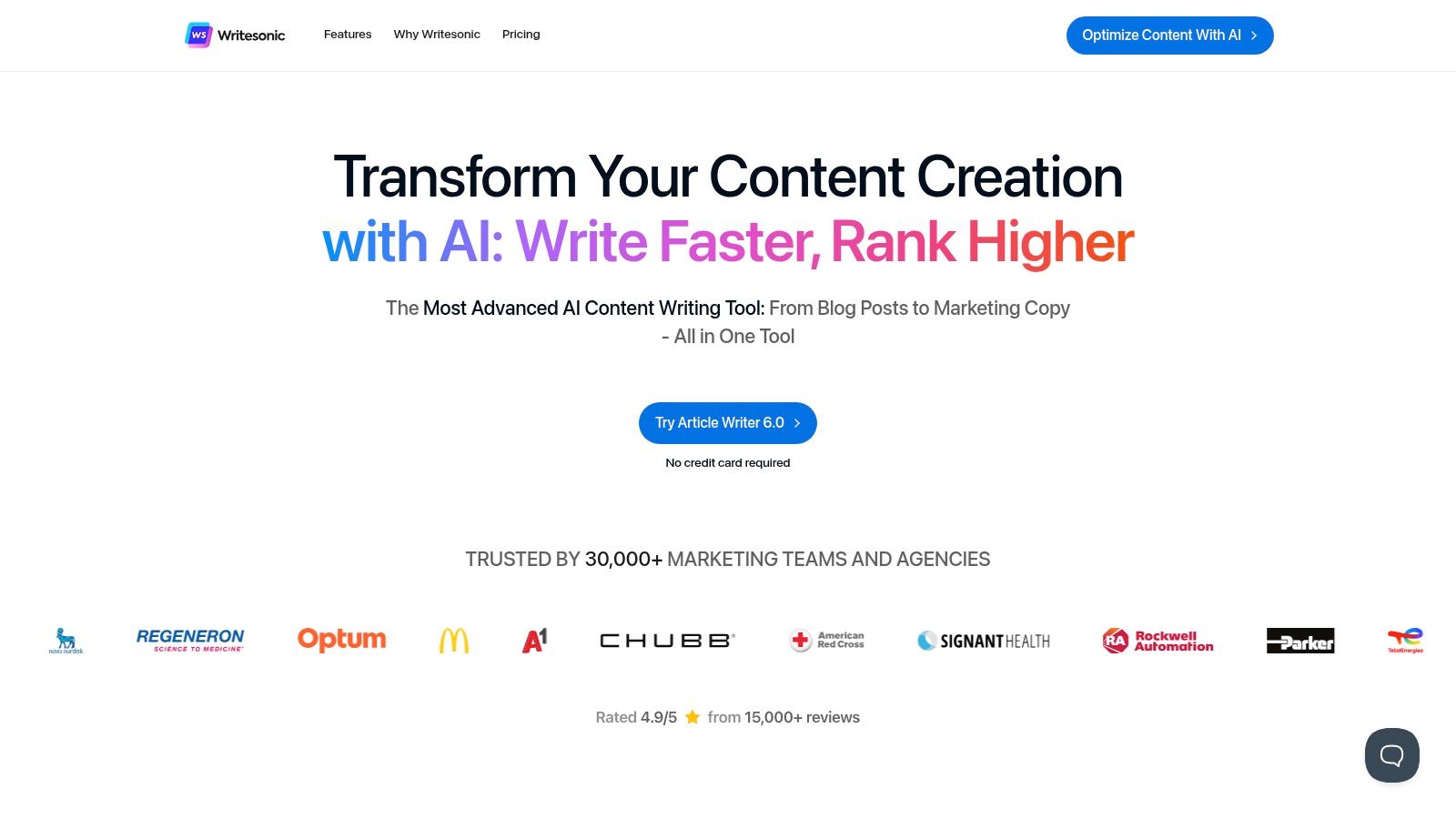
The Article Writer 6.0 workflow is robust, guiding you from a simple idea to a full-fledged, SEO-friendly article. For autoblogging, the bulk generation feature combined with the 1-click WordPress export creates a straightforward pipeline. I found the collaboration features and content calendar particularly useful for coordinating with a small team, which is something many dedicated autoblogging tools lack. It’s a solid choice for those who value versatility and a unified workflow over single-purpose specialization.
Key Details & Pricing
- Best For: Marketing teams and businesses needing a versatile, all-in-one AI content platform that goes beyond just blogging.
- Standout Feature: A massive library of over 100 templates for nearly every content type imaginable, from SEO meta tags to complete articles.
- Pros: Balanced feature set for blogs, landing pages, and SEO; wide template library and strong collaboration features. It also integrates a powerful AI voice generator, a useful extra you can learn more about in reviews of the best text-to-speech software.
- Cons: Plan and credit structures can shift, so it's wise to confirm current allowances. Advanced SEO features are concentrated in higher tiers.
- Pricing: Offers a free plan with 10,000 words/month. Paid plans start around $13/month for more features and higher limits.
Pro Tip: Use the "Content Rephrase" and "Sentence Expander" tools on your AI-generated first drafts to quickly add nuance and your unique brand voice before publishing.
Check out Writesonic here: https://writesonic.com/lp/ai-content-writer?utm_source=openai
7. Surfer
I’ve known Surfer for years as the gold standard for on-page SEO, but its evolution into an AI writer has made it an indispensable part of my content workflow. It’s less of a pure autoblogging tool and more of a complete SEO content suite. The platform excels at bridging the gap between data-driven content planning and AI-powered drafting, ensuring that what you create is engineered to rank from the very first word.
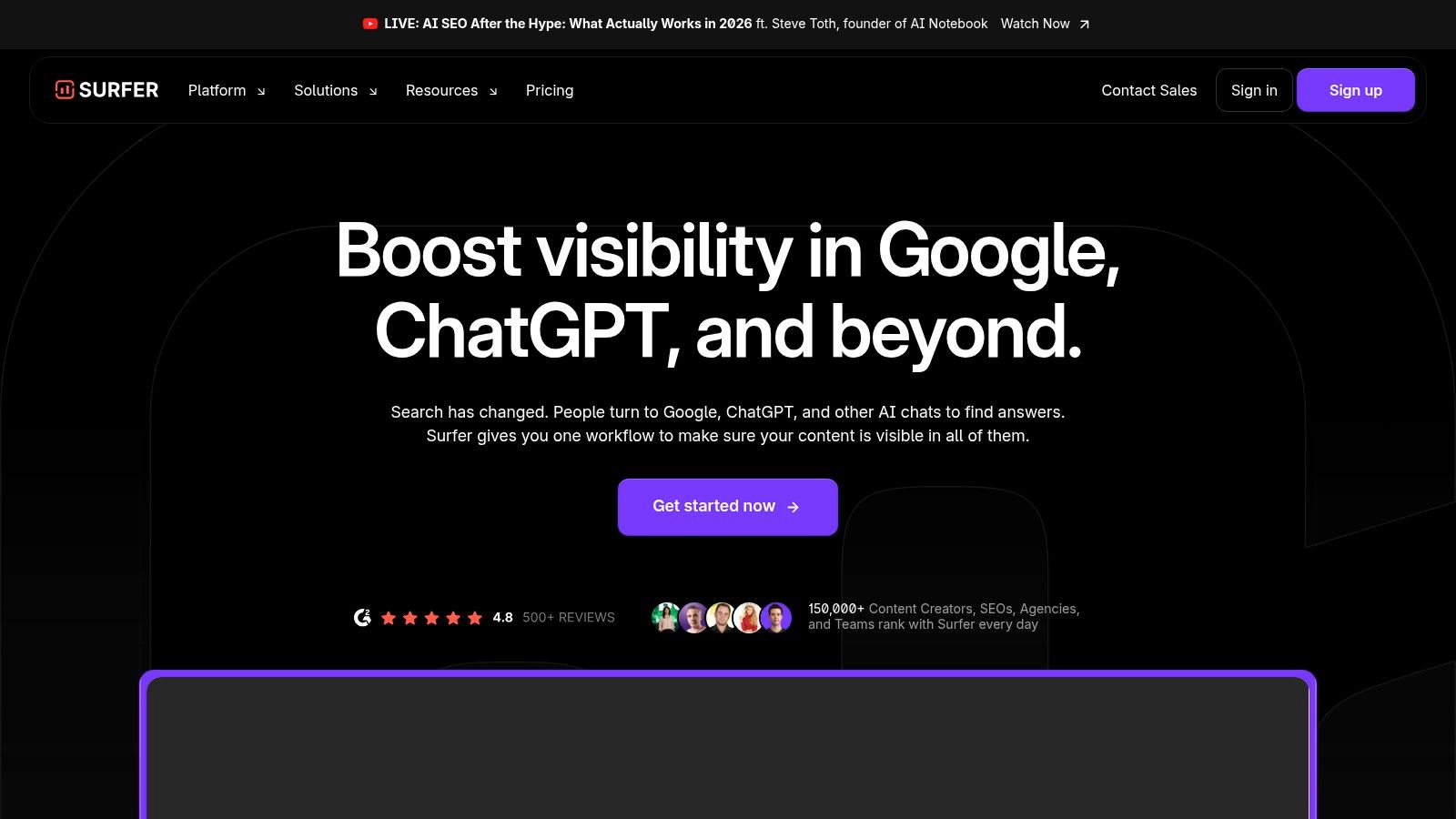
The workflow is brilliant: you use Surfer’s SERP analyzer to create a content brief, then feed that brief directly to Surfer AI. The resulting draft is already optimized with key NLP terms and structured for search intent. This two-step process makes it one of the best AI tools for blogging for teams that demand high-quality, data-backed articles without sacrificing speed. It’s the perfect blend of human strategy and AI execution.
Key Details & Pricing
- Best For: SEO agencies, content teams, and serious bloggers who prioritize on-page optimization alongside AI generation.
- Standout Feature: The integrated workflow from SERP analysis and keyword research to an optimized AI draft within the Content Editor.
- Pros: Mature and trusted on-page optimization tools; clear AI credit system helps control costs per article; great for collaborative teams.
- Cons: AI credits are capped by plan, requiring add-on purchases for high-volume needs; not an "unlimited" writing tool, so you need to budget your usage.
- Pricing: Plans bundle core SEO features with a set number of AI credits, starting around $89/month.
Pro Tip: Always run a Content Audit on your existing posts before generating new ones. Surfer identifies content decay and optimization gaps, often revealing that updating an old article will yield faster results than publishing a new one.
Check out Surfer here: https://surferseo.com
8. Frase
Frase has been a staple in my SEO toolkit for years because it excels at one thing better than almost any other tool: SERP-driven content optimization. It’s less of a pure "autoblogger" and more of a co-pilot that ensures the content you create, whether by AI or by hand, is perfectly aligned with what’s already ranking on Google. It streamlines the entire research-to-optimization workflow into a single, cohesive editor.
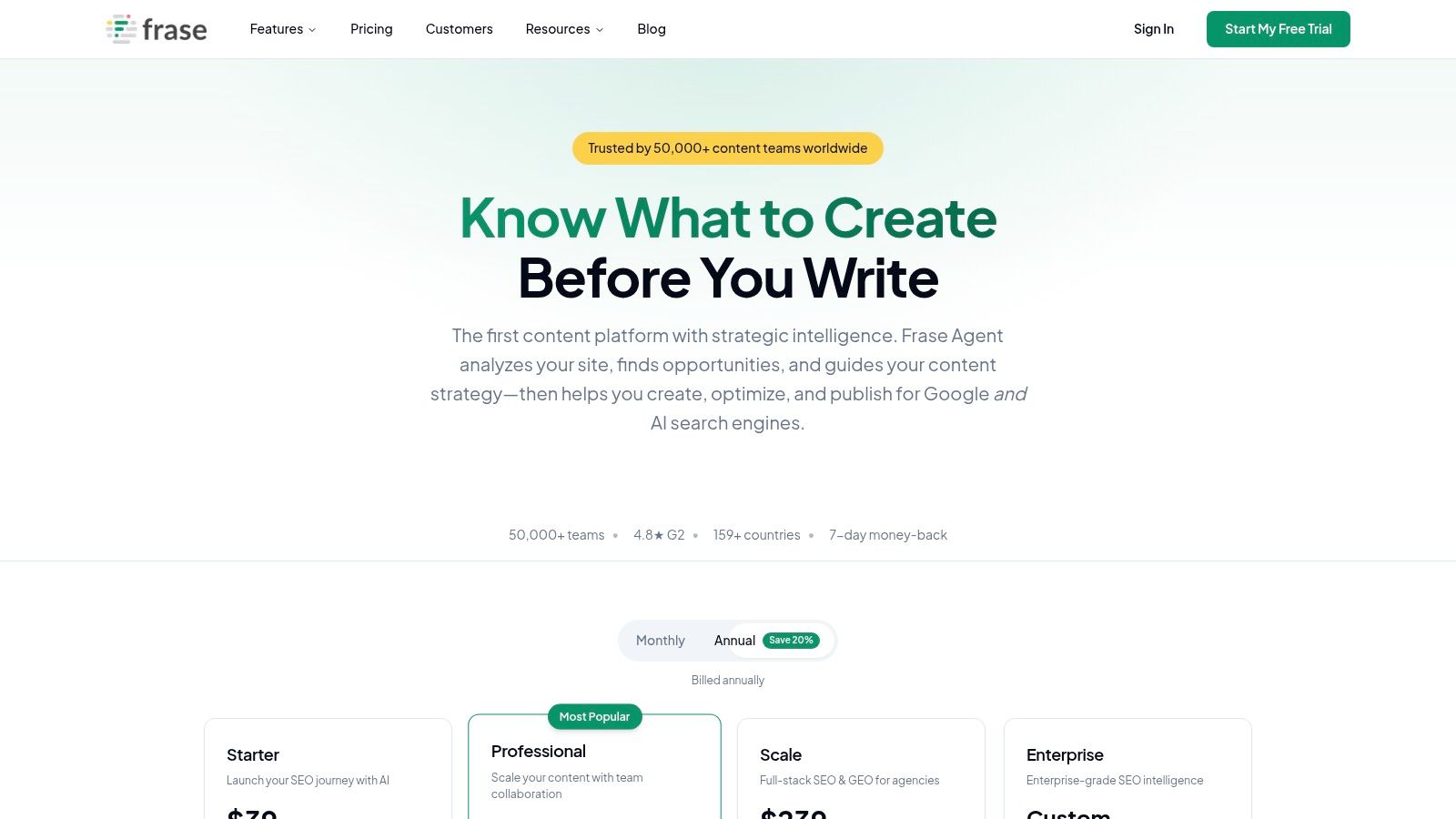
The platform analyzes top search results to build intelligent outlines and content briefs, giving you a data-backed blueprint for your article. For those with unpredictable content schedules, the pay-as-you-go "Rank-Ready AI Documents" are a fantastic option. I’ve used them myself when I needed a fully optimized draft for a competitive keyword without committing to a full subscription, making it a flexible choice among the best autoblogging tools in 2026.
Key Details & Pricing
- Best For: SEOs, content managers, and bloggers who prioritize data-driven optimization over pure content generation speed.
- Standout Feature: The all-in-one editor that combines SERP research, an outline builder, AI writing, and a content optimizer in one view.
- Pros: Strong research-to-brief workflow; pay-as-you-go documents are great for spiky content needs; integrates with Google Search Console for content analytics.
- Cons: Content project caps on plans require careful monitoring; core features like AI Search Tracking are paid add-ons for lower-tier plans.
- Pricing: Plans start at $14.99/month, with the Pro Add-On for unlimited AI features costing an additional $35/month.
Pro Tip: Use the "Content Opportunities" report, which pulls from your Google Search Console data. It identifies pages that are decaying in rank or have keywords with high-potential "question gaps" that you can quickly fill.
Check out Frase here: https://frase.io/pricing/?utm_source=openai
9. Scalenut
Scalenut is less of a single tool and more of a complete SEO content command center. After years of testing fragmented solutions, I appreciate how it unifies keyword clustering, AI writing, and content optimization into a single workflow. For teams, this is huge. You can go from high-level keyword strategy and creating topical maps to generating and optimizing dozens of articles without ever leaving the platform, making it a powerful contender for the best AI tools for blogging at scale.
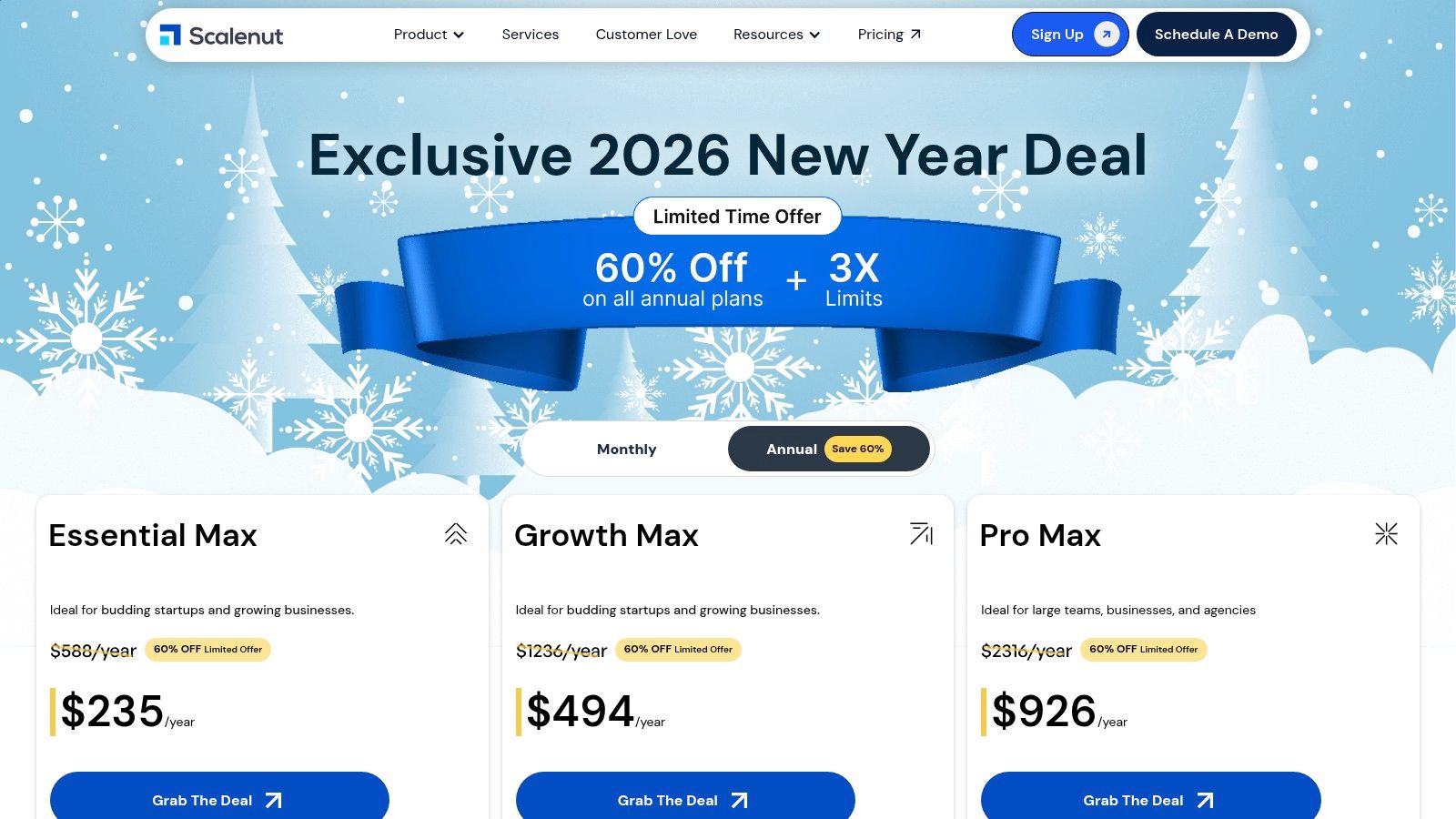
The platform's strength lies in its "plan-to-publish" approach. The Keyword Planner helps you build out entire content clusters programmatically, and the Cruise Mode writer then uses that data to generate well-structured first drafts. It’s an incredibly organized system for executing a broad content strategy, moving beyond just single-article generation to building genuine topical authority. For anyone overwhelmed by juggling multiple SEO tools, Scalenut offers a streamlined, all-in-one alternative.
Key Details & Pricing
- Best For: SEO agencies, content teams, and established bloggers who need a unified platform for planning, production, and optimization.
- Standout Feature: The integrated Keyword Planner and topical clustering, which provide a strategic foundation for large-scale content campaigns.
- Pros: Comprehensive plan-to-publish feature set; includes content audits and search visibility tracking; often has competitive annual deals with increased limits.
- Cons: Some of the best modules are reserved for higher-tier plans, and the naming of features can change during promotional periods, which can be confusing.
- Pricing: Plans typically start around $20/month for 100,000 AI words and scale up with more features and higher limits.
Pro Tip: Use the "Optimize" feature to audit your existing, underperforming content. It provides a SERP-based breakdown and NLP term suggestions to quickly refresh and improve the rankings of old posts.
Check out Scalenut here: https://www.scalenut.com/pricing?utm_source=openai
10. Outranking
Outranking is for the methodical autoblogger who craves structure and SEO predictability. After years of testing tools that often produce creative but unstructured content, Outranking’s approach was a refreshing change. It’s less of a free-form writer and more of an SEO architect, building content from a blueprint of SERP data, entities, and user intent. It excels at creating repeatable, optimized articles that follow a specific formula.
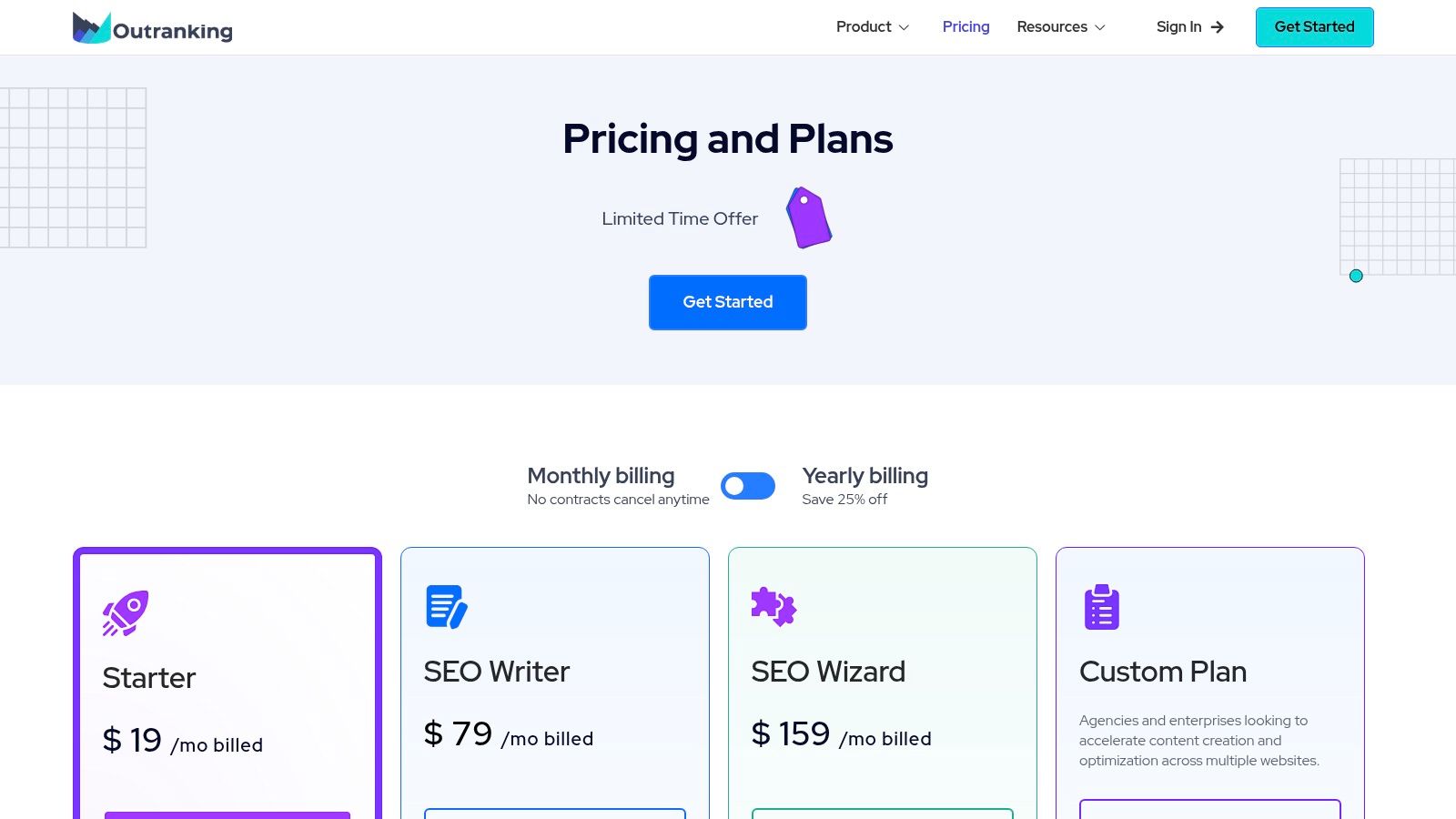
What makes it one of the best autoblogging tools in 2026 is its emphasis on process. It starts with an in-depth content brief, generates multiple AI first-draft variants, and then provides a clear optimization score and checklist. This workflow is perfect for building a content pipeline where you need consistent, SEO-aligned outputs every single time, making it ideal for teams or solo creators who rely on a system rather than just creative bursts. The automated internal linking is another huge time-saver.
Key Details & Pricing
- Best For: SEO agencies, content teams, and disciplined solo bloggers who need a structured, repeatable content creation process.
- Standout Feature: The ability to generate multiple AI first-draft variants from a single brief, allowing for A/B testing or selecting the best starting point.
- Pros: Strong focus on data-driven SEO optimization; generates highly structured and optimized drafts; excellent for creating content at scale with a predictable quality.
- Cons: The document and project caps on lower-tier plans can feel a bit restrictive and require careful management of your workflow.
- Pricing: Free plan available. Paid plans start at $79/month for 25 documents and 50,000 AI words.
Pro Tip: Use the "Concepts" feature to build a pillar page and its cluster content simultaneously. Outranking analyzes SERPs to suggest related topics, helping you map out an entire content hub from a single keyword.
Check out Outranking here: https://www.outranking.io/pricing-plan/?utm_source=openai
11. NEURONwriter
While many tools focus solely on AI generation, NEURONwriter cleverly merges SEO optimization with content creation, making it a powerful hybrid. I've used it extensively to both write new articles and supercharge existing ones that are underperforming. Its core strength lies in its NLP-driven editor, which gives you precise, term-level recommendations to improve your content score against top-ranking competitors before you even hit publish.
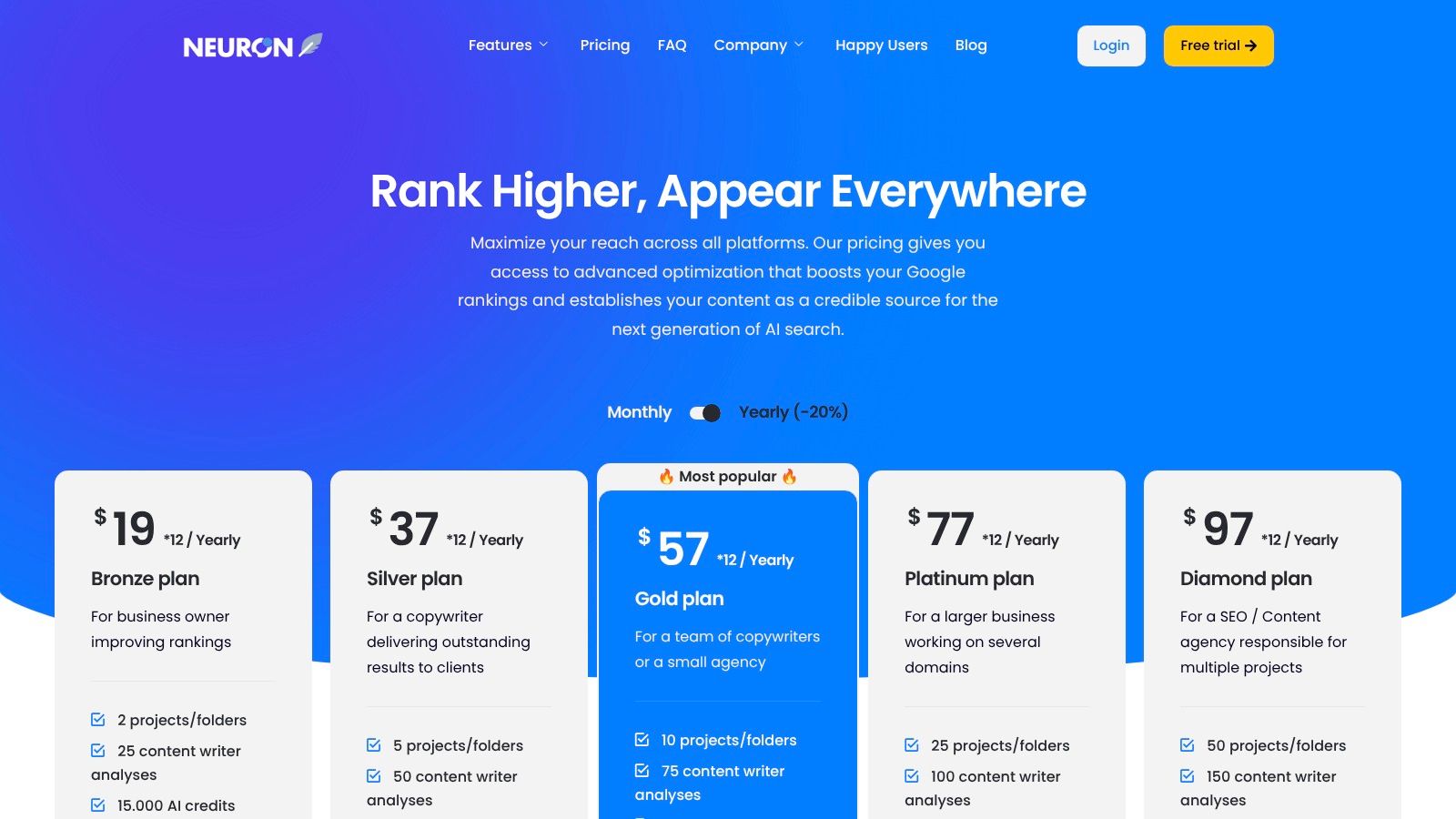
The Content Designer feature offers one-click article generation, which is great for producing first drafts that are already optimized with key terms. Its integrations with WordPress, Shopify, and Google Search Console create a streamlined workflow from research to publishing and tracking. This makes it one of the best AI tools for blogging for those who want to ensure their automated content is built on a solid SEO foundation from the start.
Key Details & Pricing
- Best For: Solo creators and small agencies who need an all-in-one SEO optimizer and AI writer without a massive budget.
- Standout Feature: The semantic SEO editor provides real-time content scoring and NLP term suggestions to guide your writing.
- Pros: Competitive pricing with generous AI credit allocations; seamlessly combines SEO analysis with content generation.
- Cons: The interface can feel less integrated than some enterprise suites; managing credits during high-volume months requires careful planning.
- Pricing: Plans typically start with lifetime deals or low monthly subscriptions, offering significant value.
Pro Tip: Use the Google Search Console integration to identify pages with high impressions but low clicks. Import them into NEURONwriter to quickly re-optimize them with AI for a fast ranking boost.
Check out NEURONwriter here: https://neuronwriter.com/pricing/?utm_source=openai
12. ZimmWriter
For those who crave raw power and ultimate control, ZimmWriter is the undisputed heavyweight champion of bulk content creation. As a Windows desktop application, it’s a bit of an outlier in a sea of web-based tools, but that’s its superpower. By running locally and connecting to your own API keys, it offers unparalleled speed and cost-efficiency for massive-scale projects. I’ve personally queued up 1,000 articles at once, a task that would cripple most other platforms.
The "Bring-Your-Own-API-Key" model is a game-changer for high-volume users. Instead of paying a markup on words, you pay the AI provider (like OpenAI) directly at their base rates. This makes ZimmWriter one of the most cost-effective autoblogging tools for scaling niche sites. Its deep research features, which pull from SERPs and add inline citations, along with its robust local SEO page builder, make it a technical marketer's dream.
Key Details & Pricing
- Best For: High-volume niche site operators, SEO agencies, and technical users who want maximum control and the lowest possible cost per word.
- Standout Feature: The ability to bulk-generate up to 1,000 articles in a single run, combined with the "bring-your-own-API-key" model for ultra-low costs.
- Pros: Extremely low variable cost at scale; massive batch processing capabilities; powerful features for local SEO and affiliate roundups.
- Cons: Windows-only (Mac users need virtualization software); requires a more technical setup with API keys.
- Pricing: A one-time purchase or a subscription model is available, starting around $9.97/month. You pay for AI usage directly to your chosen provider (e.g., OpenAI).
Pro Tip: Use the "Magic Command" feature within your article prompts to give ZimmWriter custom instructions on-the-fly, like inserting a specific call-to-action or formatting a section in a unique way. It adds a layer of manual control to your automated workflows.
Check out ZimmWriter here: https://zimmwriter.com/?utm_source=openai
Top 12 AI Autoblogging Tools in 2026 — Side-by-Side Comparison
| Tool | Core features | Quality ★ | Value & Pricing 💰 | Best For 👥 | Standout ✨/🏆 |
|---|---|---|---|---|---|
| KoalaWriter | Bulk SEO autoblogging, deep research, WordPress/webhook publish, Amazon data | ★★★★ | 💰 Mid→High (tiered word limits; premium LLMs cost more) | 👥 Niche & authority site owners scaling posts | ✨ KoalaLinks (auto internal linking) · 🏆 Purpose-built SEO pipeline |
| Byword | Programmatic templates, bulk generation, auto-indexing, PAYG credits | ★★★★ | 💰 PAYG & enterprise (transparent per-article economics) | 👥 Programmatic SEO teams & scale operators | ✨ Template-driven programmatic pages · 🏆 Dedicated-server option |
| Autoblogging.ai | Multiple article modes (Amazon review), bulk generator, WP auto-post | ★★★ | 💰 Credit-based (mode-dependent pricing) | 👥 High-volume blog networks & turnkey autoblogs | ✨ Mode variety (Quick→Godlike) · 🏆 Turnkey autoblogging flows |
| Article Forge | Automated long-form (1,500+ words), Copyscape checks, WP posting | ★★★ | 💰 Low→Mid (annual caps; trial & money-back) | 👥 Teams wanting simple, repeatable autoblogging | ✨ Simple, blog-first automation · 🏆 Generous annual word caps |
| Jasper | Canvas, Brand Voices, Agents, governance & no-code workflows | ★★★★★ | 💰 High (seat-based enterprise pricing) | 👥 Marketing teams & multi-site publishers | ✨ Brand governance + multi-model routing · 🏆 Enterprise-grade reliability |
| Writesonic | Article Writer (bulk), templates, team tools, WP export | ★★★★ | 💰 Mid (credit/plan shifts; confirm allowances) | 👥 Small teams & content studios needing end-to-end flow | ✨ Large template library · 🏆 Balanced feature set |
| Surfer | Content Editor with NLP scoring, Surfer AI credits, topical maps | ★★★★ | 💰 Mid (AI credits bundled; add‑ons for overages) | 👥 SEO-driven teams wanting on-page optimization | ✨ Data-driven editor & credit control · 🏆 Mature on-page workflows |
| Frase | SERP-driven outlines, Rank‑Ready pay-as-you-go docs, GSC integration | ★★★★ | 💰 Mid (subscription + pay-as-you-go options) | 👥 Solo/autobloggers with sporadic optimized needs | ✨ Rank‑Ready a la carte docs · 🏆 Research→brief streamlined editor |
| Scalenut | GEO planning, long-form AI, audits, visibility tracking | ★★★ | 💰 Mid (promotional annual deals) | 👥 Agencies & teams needing plan→publish stack | ✨ Keyword clustering + Watchtower tracking · 🏆 All-in-one content ops |
| Outranking | Multi-draft AI, auto optimization, internal linking, briefs | ★★★★ | 💰 Mid (project/doc caps; monitor limits) | 👥 SEO writers & autoblogging pipelines needing repeatability | ✨ Auto internal linking & multi-variant drafts · 🏆 Structured SEO outputs |
| NEURONwriter | Semantic SEO editor, one-click articles, plagiarism checks | ★★★ | 💰 Budget→Mid (generous AI credits) | 👥 Solo creators & small agencies scaling posts | ✨ Content Designer one-click posts · 🏆 Cost-effective credits |
| ZimmWriter | Windows desktop mass-writes (up to 1,000/run), citations, BYO API | ★★★ | 💰 Low variable cost at scale (you pay provider fees) | 👥 Niche-site operators running huge batches | ✨ Extreme batch throughput & local performance · 🏆 Very low variable cost |
Final Thoughts
And there you have it, our deep dive into the landscape of the best autoblogging tools in 2026 (best ai tools for blogging). After more than a decade of reviewing software, I can confidently say the pace of change has never been this exhilarating. The jump from the clunky, keyword-stuffing bots of yesterday to the sophisticated, semantically-aware AI writers of today is nothing short of revolutionary. What once felt like a gimmick is now an indispensable part of a modern content creator's toolkit.
We've covered a wide spectrum of tools, from one-click article generators like Article Forge to comprehensive SEO content suites like Surfer and Scalenut. We’ve seen powerful desktop apps like ZimmWriter that give you unparalleled control and slick, cloud-based platforms like KoalaWriter and Byword that streamline the entire research-to-publish workflow. It’s a lot to take in, but the key takeaway is this: there is no single "best" tool for everyone.
How to Choose Your AI Co-Pilot
Making the right choice isn't about finding the tool with the longest feature list. It’s about matching the tool’s core strengths to your specific workflow and goals. After spending countless hours testing these platforms, here's my advice on how to narrow down your options:
For the SEO Strategist: If your world revolves around SERP analysis, NLP terms, and outranking competitors, your shortlist should be Surfer, Frase, and Scalenut. These tools are built with an SEO-first mindset, integrating research directly into the content creation process. They’re less about "autoblogging" and more about "AI-assisted, high-performance blogging."
For the High-Volume Publisher: Are you building a niche site empire or need to produce dozens of articles a week? This is where true autoblogging tools shine. Look closely at Byword, KoalaWriter, and Autoblogging.ai. Their bulk generation features and direct-to-WordPress publishing capabilities are designed specifically for speed and scale.
For the Hands-On Tinkerer: If you love having granular control over every aspect of the AI's output, you're a perfect match for ZimmWriter. Its local, desktop-based approach and myriad of options let you craft a truly unique and customized content generation engine. It has a learning curve, but the power it offers is unmatched for those willing to learn it.
For the Generalist Content Creator: If you need a versatile tool that can handle blog posts one day and social media copy the next, Jasper and Writesonic are your jacks-of-all-trades. While not specialized autobloggers, their massive template libraries and refined user interfaces make them fantastic all-around AI writing assistants.
The Human Element Remains Your Superpower
Before you rush off to automate your entire content pipeline, remember this critical point: these are tools, not replacements. The most successful AI-driven content strategies I've seen in 2026 are not fully automated. They are AI-augmented. The best creators use these platforms to obliterate writer's block, automate tedious research, and generate solid first drafts at lightning speed.
Then, they step in. They inject their unique voice, add personal anecdotes, fact-check the AI's claims, and weave in their own expertise. The AI handles the 80% of grunt work, freeing up human creators to focus on the 20% that delivers unique value, builds audience trust, and truly makes the content special. This is the winning formula. The future isn't about choosing between human or AI; it's about creating a powerful synergy between both.
Navigating the ever-growing market of AI tools can be overwhelming. To help you stay ahead of the curve, we at Exceptional AI curate and review the most impactful AI technologies for creators and businesses. Find our latest insights, tutorials, and deep-dive comparisons at Exceptional AI.
Crafted with Outrank