If you’re hearing “AI is replacing jobs,” it’s normal to wonder if it’ll come for the trades next. Electricians see new tech every year, from smarter panels to better testers. So the real fear isn’t silly, it’s practical: will ai replace electricians, or just change the work?
Here’s the bottom line: AI can speed up parts of electrical work, especially planning, paperwork, and troubleshooting support. But it can’t take responsibility for safe installs, field decisions, and code-compliant outcomes on real jobsites. In March 2026, the bigger story is demand, not replacement.
Will AI replace electricians, or just replace parts of the job?
AI tends to replace tasks, not whole skilled trades. Think of it like a strong apprentice who never sleeps, but also can’t climb a ladder, feel heat in a lug, or notice a burnt odor behind a cover plate.
The tasks AI is best at are the ones that look like patterns on a screen:
- Reading and comparing documents (plans, submittals, O&M manuals)
- Turning notes into estimates and proposals
- Flagging likely causes based on past faults
- Scheduling, dispatch, and customer updates
On the other hand, electrical work is full of messy reality. Every building has surprises. Every “simple” service call has unknowns. That’s why “ai replace electricians” is usually the wrong framing. A better question is: Which parts of my day will AI compress into fewer minutes?
Also, demand is pushing in the opposite direction. The buildout for data centers and electrification projects is pulling hard on the workforce. Reporting in early March 2026 highlighted how the AI data center boom is intensifying an electrician shortage, not solving it with software (see this report on the electrician shortage tied to AI data centers).
So the near-term risk isn’t “AI took my job.” It’s “I didn’t adapt, and someone else delivers faster quotes, tighter documentation, and cleaner closeout packages.”
How AI already helps in residential service calls
Residential work is where AI shows up quietly first, because the workflow has a lot of repeatable admin around it. Homeowners want quick answers. Contractors want clean documentation. Meanwhile, techs want fewer hours at the desk after a full day in the field.
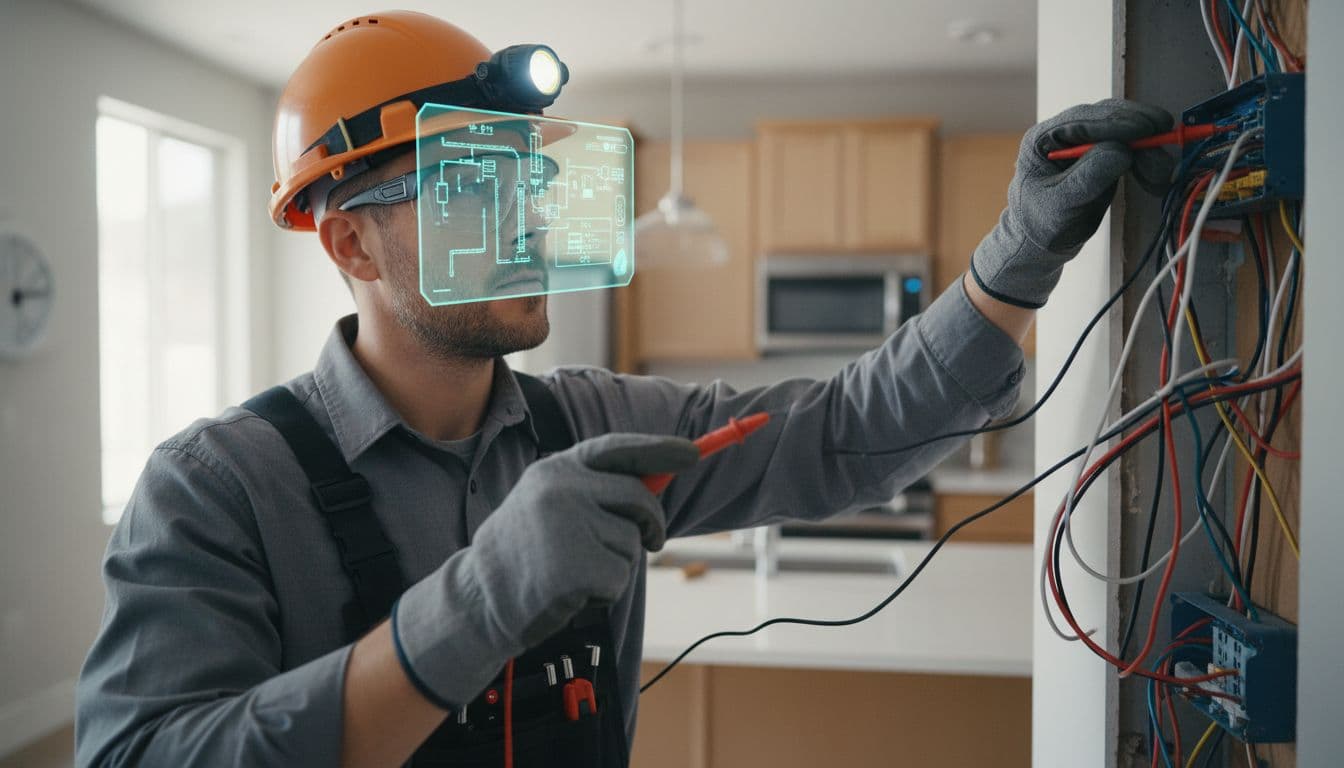
In practice, AI helps most with:
Faster front-end diagnosis (with guardrails). A good intake flow can ask the right questions (panel brand, symptoms, recent work, photos). That doesn’t replace troubleshooting, but it reduces wasted trips and missing parts.
Estimates and options that read well. Many contractors now use AI to turn rough notes into clear scope language and “good, better, best” options. The value here is communication, because homeowners buy clarity.
Photo sorting and report write-ups. AI can tag images (panel, meter base, attic junction), draft summaries, and build a “before/after” record for the customer.
Training support between jobs. Apprentices use AI to study theory, practice calculations, or talk through scenarios. That’s useful, as long as a licensed electrician checks real-world decisions.
If you want a snapshot of current electrician-focused AI tooling, this overview of AI-powered tools electricians are using in 2026 gives a good sense of what’s becoming normal.
Safety note: AI can help you move faster, but it can also help you make a mistake faster. Treat AI output like a rough draft, not an authority.
Commercial and industrial: where AI adds value (and adds new risks)
Commercial and industrial sites are where AI can save real money, because downtime is expensive and documentation stacks up fast.
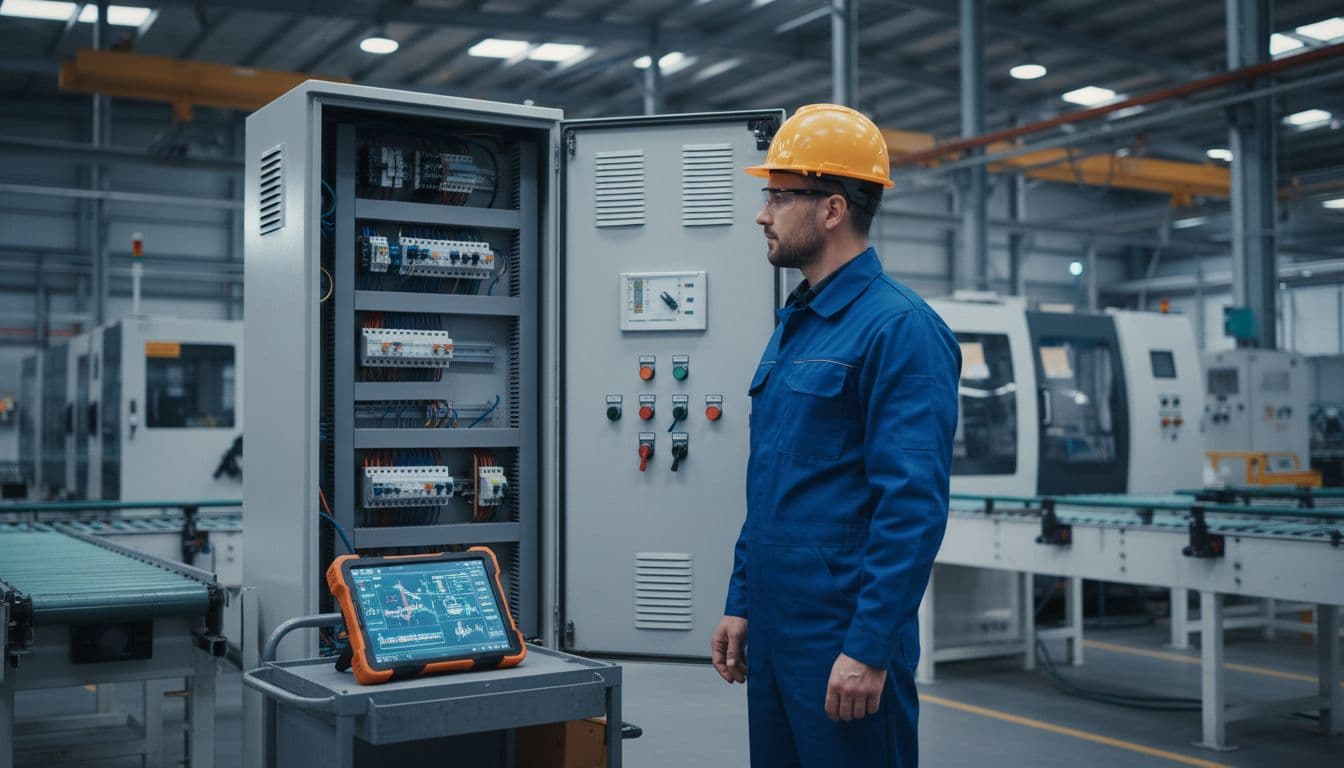
Here are the biggest real uses:
Predictive maintenance and condition monitoring. Facilities already collect loads of data (thermography, vibration, motor currents). AI can spot trends and flag “check this next shutdown” items. The electrician still validates, locks out, and repairs.
Design and documentation help. AI-assisted electrical CAD can speed up drawing tasks and bills of material, especially on repeatable builds. Tools like WSCAD ELECTRIX AI show where engineering automation is headed, even if field work remains hands-on.
Connected systems and cybersecurity. As switchgear, meters, and building controls get more networked, the attack surface grows. That matters because a cyber issue can look like an electrical issue at first. At the same time, AI-generated scripts and configs can introduce vulnerabilities if nobody reviews them carefully. This is why research like Veracode’s write-up on AI-generated code risks should be on the radar for industrial teams dealing with automation, PLCs, and remote monitoring.
Code and compliance still rule the day. AI can help cross-check documents, but local electrical codes and inspection practices vary by region. For a broader look at how large language models can support code-related workflows (without replacing expert judgment), see this discussion of LLMs and code compliance work.
What AI can’t do reliably on a jobsite today (plus a skills checklist and 12-month plan)
Some parts of electrical work are still stubbornly human. Not because electricians are “old school,” but because the job blends physical skill, risk control, and real-time judgment.
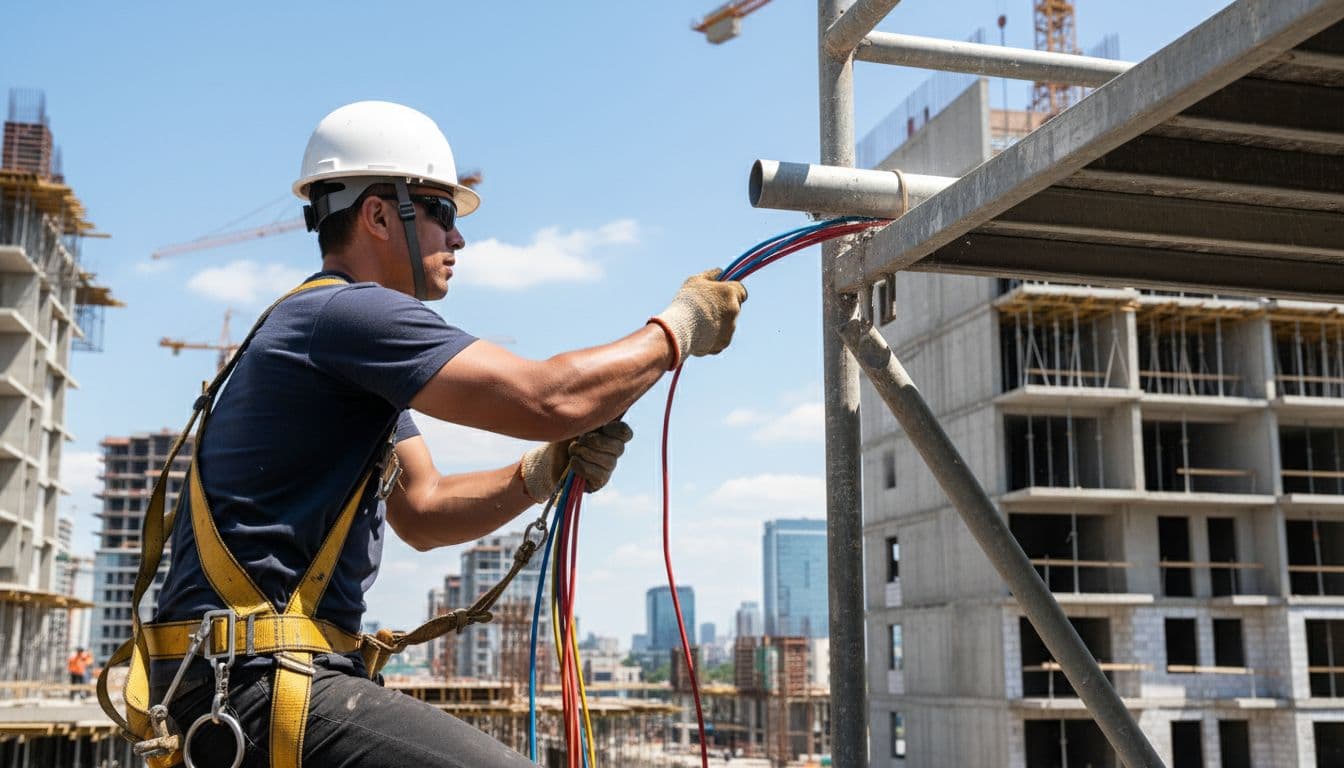
AI still struggles with these jobsite realities:
- Physical execution: bending pipe, pulling wire, setting gear, making terminations, working in awkward spaces
- Sensing and situational awareness: heat, smell, vibration, loose gear, water intrusion, “something’s off” instincts
- Accountability: signing off that work is safe, tested, and compliant
- Site coordination: dealing with delays, access, other trades, and last-minute changes
If a tool can’t own the risk, it can’t own the work. AI can advise, but electricians carry the safety responsibility.
A quick skills checklist helps keep your career “future-resistant,” without pretending the future is magic.
| Skill area | What it looks like on the job | Why it holds up |
|---|---|---|
| Troubleshooting fundamentals | Meter use, fault isolation, clear test plans | AI suggestions still need proof |
| Code literacy (local varies) | Knowing where to look, documenting decisions | Compliance is contextual |
| Communication | Explaining options, writing clean notes | Customers and GCs buy clarity |
| Digital documentation | Photos, as-builts, closeout packages | Faster billing and fewer disputes |
| Controls and networking basics | VFDs, sensors, basic Ethernet concepts | More systems are connected |
| Safety leadership | LOTO discipline, JHA habits, mentoring | Risk never goes away |
Next, here’s a simple 12-month plan that doesn’t require a career reset:
- Pick one workflow to automate (estimates, job notes, submittals), then stick with it for 30 days.
- Build a “prompt notebook” for common tasks (scope write-ups, change-order language, material lists).
- Tighten your proof habits: test, verify, document, because AI can be confidently wrong.
- Add one adjacent skill (basic controls, fire alarm basics, or low-voltage networking).
- Standardize photos and closeouts so every job leaves a clean trail for inspection and billing.
- Teach an apprentice one AI-assisted habit (better notes, better labels), because teaching locks it in.
Conclusion
AI will change how electricians quote work, document work, and troubleshoot patterns. Still, it won’t replace the person who shows up, works safely, and leaves a system that passes inspection. If you’re worried about “ai replace electricians,” focus on what AI can’t do: judgment, responsibility, and hands-on skill. Then use AI where it helps, so your work stays both faster and cleaner.