If you drive for a living, you’ve probably heard it at a truck stop or on a dispatch call: will AI replace truck drivers? The honest answer is yes in some narrow lanes, and no in most of the work that keeps freight moving.
In 2026, autonomous trucking is real, but it’s also limited. It looks less like a sci-fi robot rig and more like a carefully fenced-in service on specific highways, in good conditions, with a lot of humans behind the scenes.
So what’s actually changing first, what’s staying human for a long time, and what should drivers and fleets do now?
What autonomous trucks can actually do today (and where they can’t)
Most of the “driverless” progress you hear about is focused on hub-to-hub interstate routes. Think long, straight highway miles between terminals near major cities, not backing into a tight dock behind a grocery store.
That focus isn’t random. Highways are more predictable: fewer pedestrians, fewer surprise turns, and clearer lane markings (most of the time). Companies also pick routes with supportive weather patterns and strong cellular coverage because remote support still matters.
Public reporting in 2025 and early 2026 shows the industry pushing past demos into limited commercial runs. For example, Aurora has discussed scaling plans and shared safety milestones like incident-free driverless miles, covered in reporting on Aurora’s driverless mileage and 2026 targets. That matters, but it’s still a small slice of total US freight.
It’s also important to separate ADAS from real autonomy:
- Many new tractors offer lane centering, adaptive cruise, and automatic emergency braking.
- Those features reduce fatigue, but they do not replace a driver.
- True autonomy depends on where the truck operates and what conditions it can handle safely.
Some of the most practical automation is happening in “middle-mile” style operations, where routes repeat and yards are controlled. You can see that framing in announcements like Gatik’s update on driverless commercial deliveries.
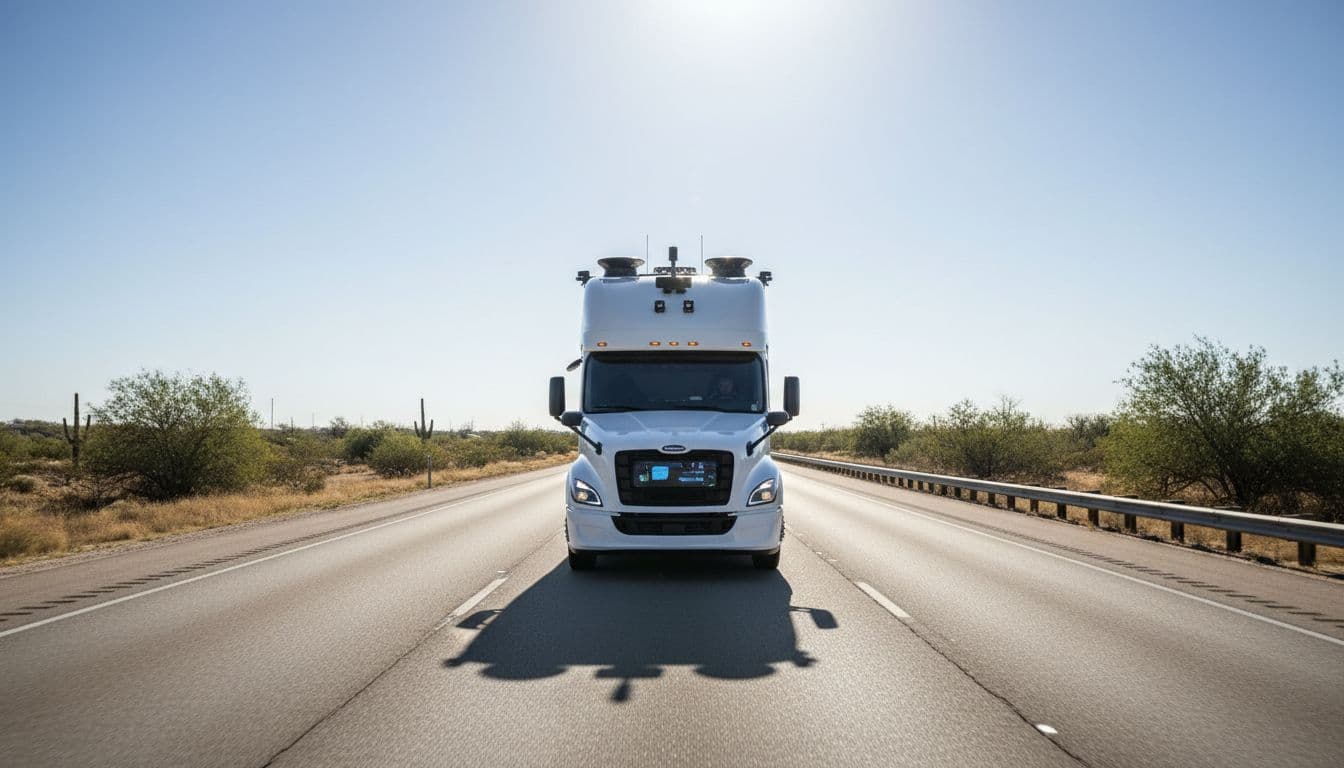
Why “driverless” is easiest on interstates, and hardest everywhere else
A good way to think about autonomy is like aircraft autopilot. It can fly long stretches, but pilots still handle takeoff, landing, and weird situations. Trucking has the same split.
Autonomous systems do best when the operating design domain (ODD) stays stable. On highways, the system sees the same types of lanes, merges, and speeds again and again. In contrast, city driving is a constant pop quiz: double-parked cars, pedestrians stepping off curbs, hand signals from construction crews, and delivery customers who want the trailer “right there, no, a little more.”
Even if a truck can drive itself on I-10, a lot can force a handoff:
- Work zones with confusing cones and temporary lanes
- Bad weather (fog, heavy rain, blown dust, glare)
- Police direction and unusual traffic control
- Complex pickups and drops, especially older facilities
- Unmapped detours and last-minute route changes
Regulation also slows broad rollout. The US still has a patchwork of state rules, and federal agencies are actively studying how driverless trucks fit into safety oversight. You’ll see that tension in industry coverage of federal activity like FMCSA’s Triangle Study and what it signals about driverless trucks and in broader reporting on policy direction such as DOT’s posture on autonomous trucking.
The biggest risk isn’t a truck that can’t drive on a clear highway. It’s a truck that drives great 99.9% of the time, then hits an edge case at the worst moment.
That’s why the near-term win is simple: automate the boring miles first, then keep humans in the messy parts.
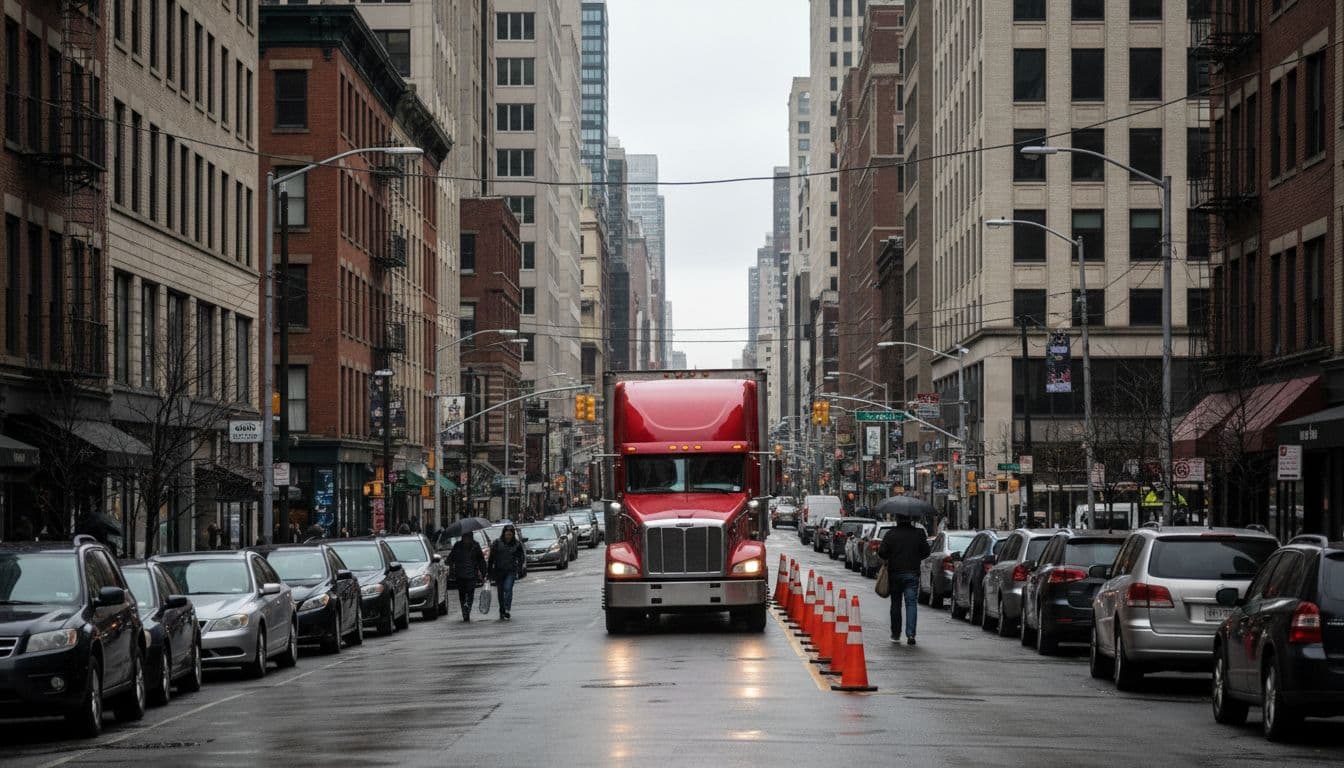
So will AI replace truck drivers, or just change the job?
Here’s the realistic middle ground for 2026 to the early 2030s: AI replaces some driving hours on specific lanes, but it doesn’t replace the full job for most drivers.
The first visible shift is likely a “split route” model:
- Driverless or highly automated trucks run interstate trunk lines between hubs.
- Human drivers handle first-mile and last-mile pickup and delivery.
- More freight moves on predictable schedules, with tighter appointment windows.
For fleets, that can mean fewer long-haul positions on a few corridors, while demand holds or grows for local, regional, and specialized work. For owner-operators, it can mean new competition on easy lanes, but also more opportunity in work that automation avoids.
A simple way to picture the split is by task, not by job title:
| Trucking task | Likely to automate first | Likely to stay human longer |
|---|---|---|
| Steady interstate cruising | Yes, on fixed routes in good conditions | In snow, heavy rain, or frequent detours |
| Backing to tight docks | Limited | Yes, especially older sites |
| Customer check-in, paperwork, exceptions | Some tools help | Yes, because humans solve conflicts fast |
| Pre-trip inspections and minor fixes | Some sensors help | Yes, hands-on work remains |
| Hazard response (blowouts, debris, crashes) | No | Yes, quick judgment matters |
Meanwhile, new roles grow around autonomous operations: fleet technicians for sensor suites, remote support staff, yard coordinators, and driver-trainers who know both the road and the tech.

If you want a grounded view of what fleets are prioritizing right now, including AI features that show up before full autonomy, see Commercial Carrier Journal’s 2026 look at AI trends in trucking.
Where automation arrives first, and where drivers stay essential
If you’re looking for the clearest takeaway, it’s this:
- First to automate: long, repetitive interstate lanes between freight hubs (often in Sun Belt states), plus controlled middle-mile routes.
- Last to automate: urban delivery, irregular routes, bad weather regions, complex customer sites, hazmat edge cases, and anything that depends on human service.
In other words, AI will take miles before it takes the whole job.
Small glossary for autonomous trucking talk
- SAE Levels (0 to 5): A scale for driving automation. Most trucks on the road today are Level 1 to Level 2 (driver still responsible). Level 4 is the usual target for “driverless” within a defined area and set of conditions.
- ODD (Operational Design Domain): The exact conditions where the system is designed to work (roads, speed range, weather limits, time of day).
- Teleoperation: Remote human assistance. This can mean guiding decisions or supporting a stopped vehicle, not “playing a video game” at highway speed.
Conclusion: the job isn’t disappearing, it’s getting split
AI isn’t about to wipe out trucking in one sweep. Still, it will reshape the easiest parts first, especially highway miles on fixed corridors. The safest bet is to plan for a future where humans handle complexity and machines handle repetition.
If you’re a driver, the smartest question isn’t “Will I be replaced?” It’s “Which routes and tasks will stay human, and how do I move toward them?”