Will Cybersecurity Be Replaced by AI? The Honest Truth for 2026
I remember sitting in a recruitment strategy meeting back in 2023 when the first wave of generative AI panic hit the tech world. A senior developer leaned over and asked if we should even bother hiring junior security analysts anymore since a bot could soon triage every alert. Fast forward to 2026, and the answer has become incredibly clear.
If you are wondering whether AI will replace cybersecurity professionals, the short answer is yes & no. AI will not replace the cybersecurity workforce, but it is fundamentally dismantling and rebuilding the roles we once knew.
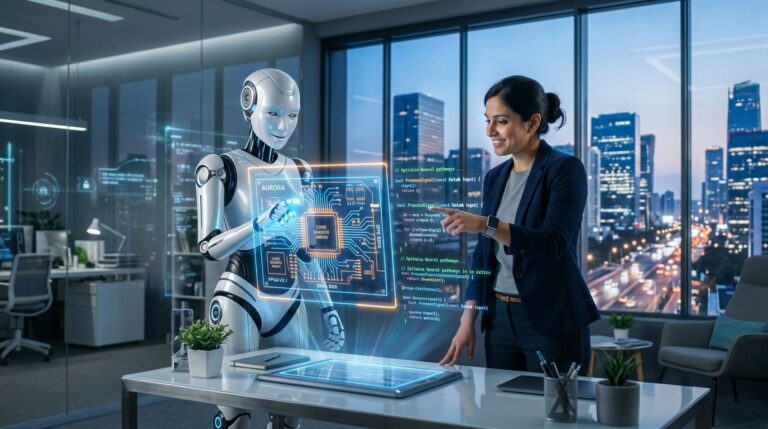
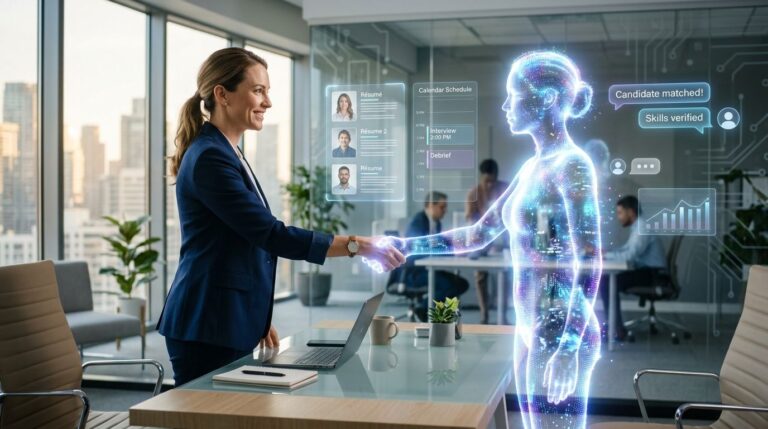
In 2026, the industry is not facing a replacement of humans by machines, but rather a replacement of professionals who do not use AI by those who do.
We are seeing a shift from manual labor to strategic orchestration where the human remains the ultimate authority in a machine speed world.
The Reality of Cybersecurity Recruitment in 2026
As someone who has spent years spanning the gap between deep tech and talent acquisition, I have seen the hiring landscape shift beneath our feet. We used to look for people who could sit in a Security Operations Center and stare at logs for eight hours. Today, if I see that on a resume, I worry that the candidate is already obsolete.
Recruitment data for 2026 shows a fascinating paradox. While AI is now handling roughly 80 percent of initial threat triaging and routine patch management, the demand for human security experts has actually hit an all-time high. The roles have simply migrated up the value chain. Companies are no longer desperate for hands; they are desperate for brains that can govern the autonomous agents doing the heavy lifting.
Why the Human Element Cannot Be Automated
There is a persistent myth that because AI can write code and detect patterns, it can eventually manage an entire security posture. However, there are several biological advantages that silicon simply cannot replicate yet.
Strategic Nuance and Business Context
An AI agent might flag a massive data egress as a critical threat. A human analyst knows that the egress is actually a pre-authorized migration for a secret company merger that has not been announced yet. AI lacks the tribal knowledge and political awareness that defines how businesses actually operate.
Ethical Decision Making in Crisis
When a breach occurs, the decisions are rarely purely technical. They are legal, ethical, and reputational. A machine can follow a playbook, but it cannot weigh the moral implications of shutting down a life-saving medical network to contain a virus. Humans are the only ones who can take accountability for these high-stakes trade-offs.
Creative Adversarial Thinking
Hackers are human beings. They are creative, spiteful, and unpredictable. While AI is excellent at defending against known patterns, it often struggles with the bizarre, lateral logic of a human attacker who finds a loophole in a social engineering scheme or a physical security flaw.
The Rise of the AI Security Architect
In my recent recruitment cycles, the most sought-after title is the AI Security Architect. This role did not really exist in a meaningful way three years ago. These professionals do not just secure networks; they secure the AI itself.
They are tasked with preventing data poisoning, where an attacker feeds bad info into a training model, and protecting against prompt injection. If you are looking to future-proof your career, this is the gold mine. We are moving away from the era of the human firewall and into the era of the human architect.
How to Stay Relevant in the Age of Automation
If you are a student or a professional worried about your spot in the 2026 market, you need to change your toolkit. The days of being a specialist in one specific tool are fading.
- Master Agentic Workflows. You need to know how to set goals for autonomous agents and how to audit their outputs.
- Focus on Communication. The ability to explain a complex technical risk to a board of directors is now more valuable than the ability to manually scan a port.
- Understand AI Governance. Knowledge of the legal frameworks surrounding AI data usage is becoming a core part of the security curriculum.
Interesting Shift: The Death of the Junior Role?
One of the most common questions I get from graduates is whether entry-level roles are disappearing. It is a valid concern. AI has effectively automated the tier-one analyst out of a job. However, this has created a new type of entry-level position: the AI Operator. Instead of doing the grunt work, new hires are now expected to oversee the bots that do the grunt work. This requires a higher baseline of knowledge, but it also means the career path starts at a more strategic level than ever before.
Frequently Asked Questions
Will AI eventually reach a point where humans are unnecessary?
It is highly unlikely. As defense improves through AI, attackers also use AI to create more complex threats. This arms race ensures that a human will always be needed to provide the creative edge and the final word on risk tolerance.
Should I still get traditional certifications like CISSP?
Yes, but they are no longer the finish line. They are now seen as the entry requirement. In 2026, recruiters look for these certifications paired with specialized AI security credentials or a portfolio of work involving automated defense systems.
Can AI fix all software vulnerabilities automatically?
AI is getting very good at finding flaws, but it still struggles with the logic of complex, interconnected systems. It can patch a simple bug, but it might break five other things in the process. Human oversight is still the safety net for every automated patch.
Is cybersecurity still a good career choice in 2026?
It is one of the best. The world is more digital than ever, and the risks are higher. While the tasks are changing, the importance of the mission is only growing. The pay scales for those who can bridge the gap between AI and security are among the highest in the tech industry.
Great Sections to Watch: The Next Frontier
As we look toward the end of the decade, we are starting to see the emergence of Quantum-Resistant Security. While AI is the headline today, the next big shift will be how we protect data from the processing power of quantum computers. If you want to stay ahead of the curve, keep an eye on how AI is being used to develop new encryption standards that even the most powerful machines cannot crack.
Final Thoughts from the Recruiter Desk
The fear of being replaced is a natural reaction to rapid change, but history shows us that technology usually creates more work than it destroys. It just happens to be different work. If you are willing to learn, to adapt, and to view AI as a powerful colleague rather than a competitor, you will find that 2026 is an era of incredible opportunity.
The most successful people I hire today are those who have a healthy dose of skepticism about AI. They know what it can do, but more importantly, they know what it cannot do. That awareness is what makes them irreplaceable.