Will Pilots Be Replaced by AI? Clear Answer!
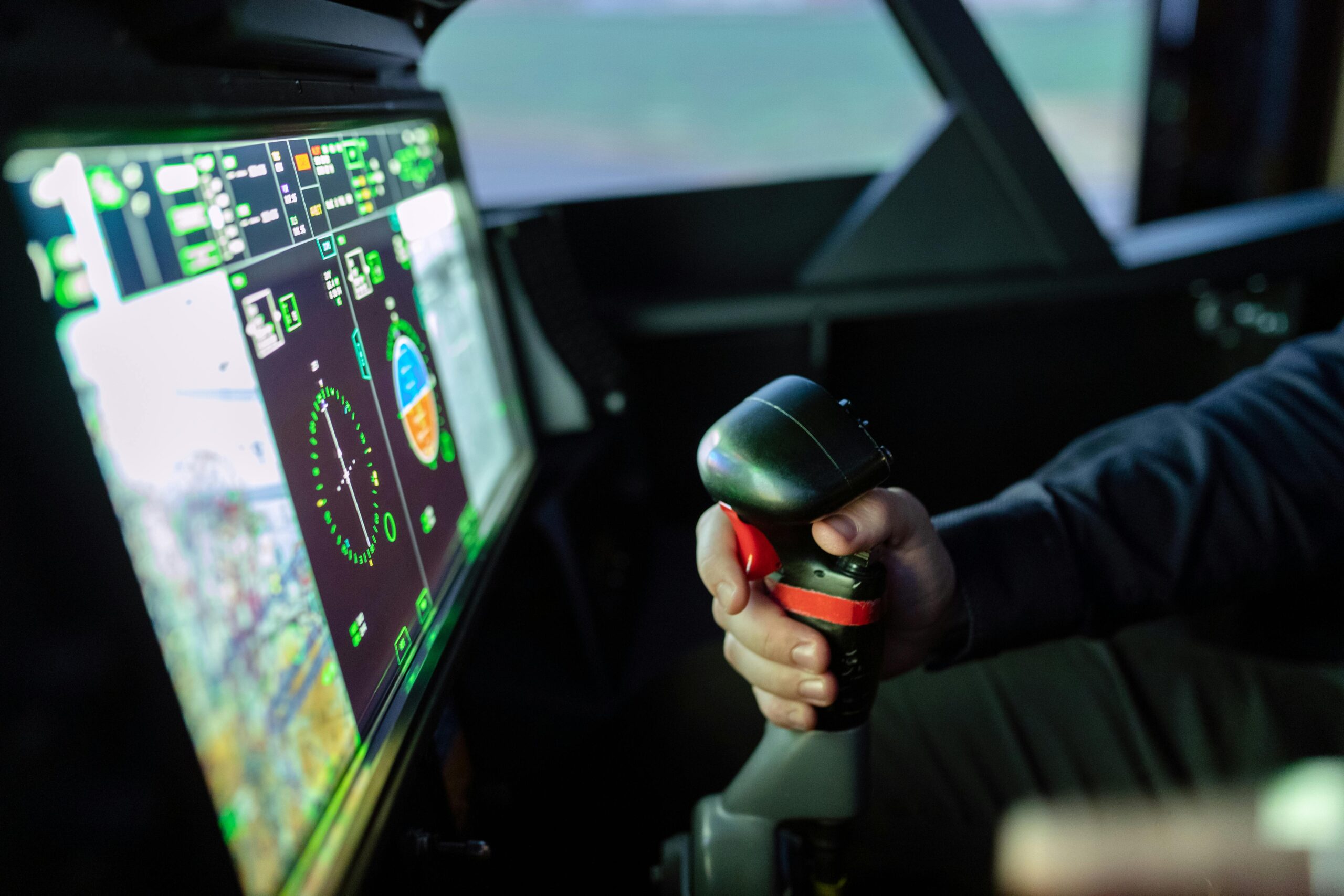
I recently spent a morning at a flight simulator facility with a group of veteran captains and tech investors. The atmosphere was thick with a specific kind of tension.
On one side, you had the technologists showing off agentic AI systems that can land a Boeing 787 in a crosswind better than most humans. On the other, you had the pilots, whose skepticism was not born of fear for their jobs, but of a deep understanding of what it actually means to be responsible for three hundred lives at thirty thousand feet.
If you are looking for a clear answer on whether AI will replace pilots, here is the honest truth: AI will probably not replace pilots in the next ten years, and likely not for decades after that.
Even though the technology to fly a plane autonomously exists today, the trust gap between what a machine can do and what a human will permit is massive. In aviation, trust does not just lag behind technology; it moves at a glacial pace because the cost of being wrong is total.
The Pilot Paradox: Great Tech, Zero Trust
We are currently living through a fascinating paradox in the aviation industry. In 2026, we have the most advanced flight automation in history. We have AI agents that can manage fuel efficiency, predict engine failures before they happen, and navigate complex weather patterns in real time. From a purely technical standpoint, we could probably fly a cargo plane across the Atlantic without a human on board right now.
But when it comes to passenger travel, the conversation stops cold. Why? Because flying is the ultimate high-trust activity.
The Elevator Analogy
Think back to the early 1900s. Elevators used to have human operators who manually leveled the car with the floor and opened the gates. When automatic elevators were first introduced, people were terrified. Even though the technology was proven, it took nearly fifty years and a massive strike by elevator operators for the public to finally accept a windowless box that moved on its own.
Now, multiply that anxiety by ten thousand. An elevator falls a few floors; a plane falls seven miles. We are currently in the 1920s phase of autonomous flight. The tech is here, but the collective human psyche is nowhere near ready to board a pilotless jet.
Why the Next Ten Years Belong to Humans
Even as AI becomes more integrated into the cockpit, several factors ensure that the captain’s seat remains occupied by a human being through at least 2036.
1. The Sully Factor: Solving the Unforeseen
AI thrives on data and probability. It is excellent at handling scenarios it has seen ten million times in a simulator. However, aviation is defined by the black swan event—the bird strike, the dual engine failure, or the freak sensor glitch that has no precedent.
A human pilot like Chesley Sullenberger does not just follow a checklist; they use intuition, spatial awareness, and a biological will to survive to make creative decisions in seconds. AI lacks the ability to troubleshoot outside of its training data, and in the air, the unexpected is the only thing you can count on.
2. The Regulatory Fortress
The aviation industry is the most regulated sector on earth, and for good reason. For a fully autonomous passenger plane to be certified, every single line of code in its AI model would need to be explainable and verifiable.
In 2026, we still struggle with the black box problem of deep learning. If an AI makes a maneuver, we cannot always explain exactly why it chose that specific path. Regulators like the FAA and EASA will not sign off on a system they cannot fully audit, and building that level of transparency into agentic AI will take at least a decade of research.
3. The Accountability Requirement
Who is responsible if an AI makes a mistake? If a human pilot makes a move that results in an accident, there is a clear chain of command and legal accountability. You cannot put an algorithm on trial, and you cannot strip a software package of its license. Society demands a human soul at the front of the plane because we want to know that the person making the decisions has the same skin in the game as the passengers.
The Shift From Flying to System Management
Just like in cybersecurity, the role of the pilot is evolving from a manual operator to a high-level system manager. In my recruitment work, I am seeing airlines look for a new profile of aviator.
- Systems Orchestrators: Pilots who are experts at managing the AI agents that handle the routine phases of flight.
- Ethics and Risk Leads: Crews trained specifically to override autonomous systems when the machines move into a logic loop that does not match the real-world environment.
- Hybrid Aviators: Professionals who understand the underlying machine learning models and can spot data drift or sensor bias before it leads to a flight path error.
Frequently Asked Questions
Will we see single-pilot cockpits soon?
There is a lot of talk about moving to a single-pilot operation for long-haul flights, with AI acting as the second officer. While this is technically feasible, the pushback from pilot unions and passenger advocacy groups is immense. For now, the redundancy of two humans is seen as the gold standard for safety.
Is it worth starting pilot training in 2026?
Absolutely. There is currently a global shortage of over 80,000 pilots. The industry is desperate for new talent, especially those who are tech-savvy and comfortable working alongside AI. You are not entering a dying field; you are entering a field that is becoming more high-tech and high-paid.
Will cargo planes be the first to go autonomous?
Yes. We are already seeing autonomous cargo test flights in 2026. Because there are no passengers on board, the risk profile is different. This will likely be the testing ground for the next decade, proving the safety records that will eventually be used to convince the public to trust pilotless passenger jets.
Does AI make flying safer?
Incredibly so. AI is already used for predictive maintenance, which catches mechanical issues before the plane even leaves the gate. It also helps with traffic collision avoidance and fuel optimization. AI is making pilots better, not replacing them.
The Trust Gap: A Reality Check
To understand why trust lags, look at the self-driving car industry. We have had autonomous cars on the road in limited capacities for years, yet every time one gets into a minor fender bender, it makes international headlines.
In aviation, the tolerance for error is zero. We will need to see millions of hours of accident-free autonomous cargo flights before the average traveler is willing to buy a ticket for a plane with an empty cockpit. That cultural shift is a generational process, not a technological one.
Final Thoughts: The Human Guardrail
The narrative of AI vs. Pilots is a distraction. The real story is the creation of the most sophisticated human-machine partnership in history. The most successful pilots of the next decade will be those who embrace AI as a tireless co-pilot that handles the math, while they remain the masters of judgment and empathy.
Technology might provide the wings, but it is the human heart and mind that provide the safety net. If you are worried about the machines taking over, just remember the elevator. We eventually trusted the button, but it took a very long time for us to stop looking for the person in the uniform.