
Will AI Replace Psychiatrists? A Balanced 2026 Answer
It’s easy to picture a future where you open an app, describe what you’re feeling, and get the same help you’d get in a psychiatrist’s office. Some tools already feel close to that.
Still, the real question isn’t whether AI can “talk like” a clinician. It’s whether AI psychiatrists can safely take over the job, including diagnosis, medication decisions, and crisis care.
In March 2026, the most realistic answer is simpler: AI is changing psychiatry fast, but replacement is unlikely. What’s coming looks more like AI-assisted care, with humans staying responsible for the hardest calls.
What AI can and can’t do in psychiatry in 2026
AI shows real value when the work is repetitive, data-heavy, or time-sensitive. In many clinics, it already helps with “between-visit” care, where patients often struggle most.

Here’s where AI commonly helps today:
- Triage chatbots (light screening): Some systems ask structured questions and flag high-risk answers. This can speed up routing and reduce wait times.
- Symptom tracking and pattern spotting: Apps can log sleep, mood, anxiety, or medication adherence, then highlight changes that a person might miss.
- Decision support for clinicians: AI can summarize charts, surface interactions, and suggest questions to ask next. This fits the “copilot” role described in research on agent-like clinical systems, such as agentic AI in psychiatric care roadmaps.
- Documentation and measurement-based care: Tools can draft visit notes and organize rating scales so progress is easier to track over months.
AI can also support self-guided therapy programs. For example, a peer-reviewed trial in Communications Medicine looked at generative AI feedback in CBT and reported improved engagement in a structured setting, described in a randomized trial of generative AI in CBT.
However, “helps” doesn’t mean “replaces.” These tools still struggle with context. They can miss sarcasm, cultural meaning, or signs that a person is masking symptoms. They can also produce confident-sounding mistakes, which is a dangerous trait in medicine.
A useful mental model: AI can be a strong assistant, but it’s not the accountable decision-maker.
Why human psychiatrists remain hard to replace
Psychiatry isn’t only about matching symptoms to a label. It’s also about trust, safety, and real-world tradeoffs. That’s where AI psychiatrists run into hard limits.
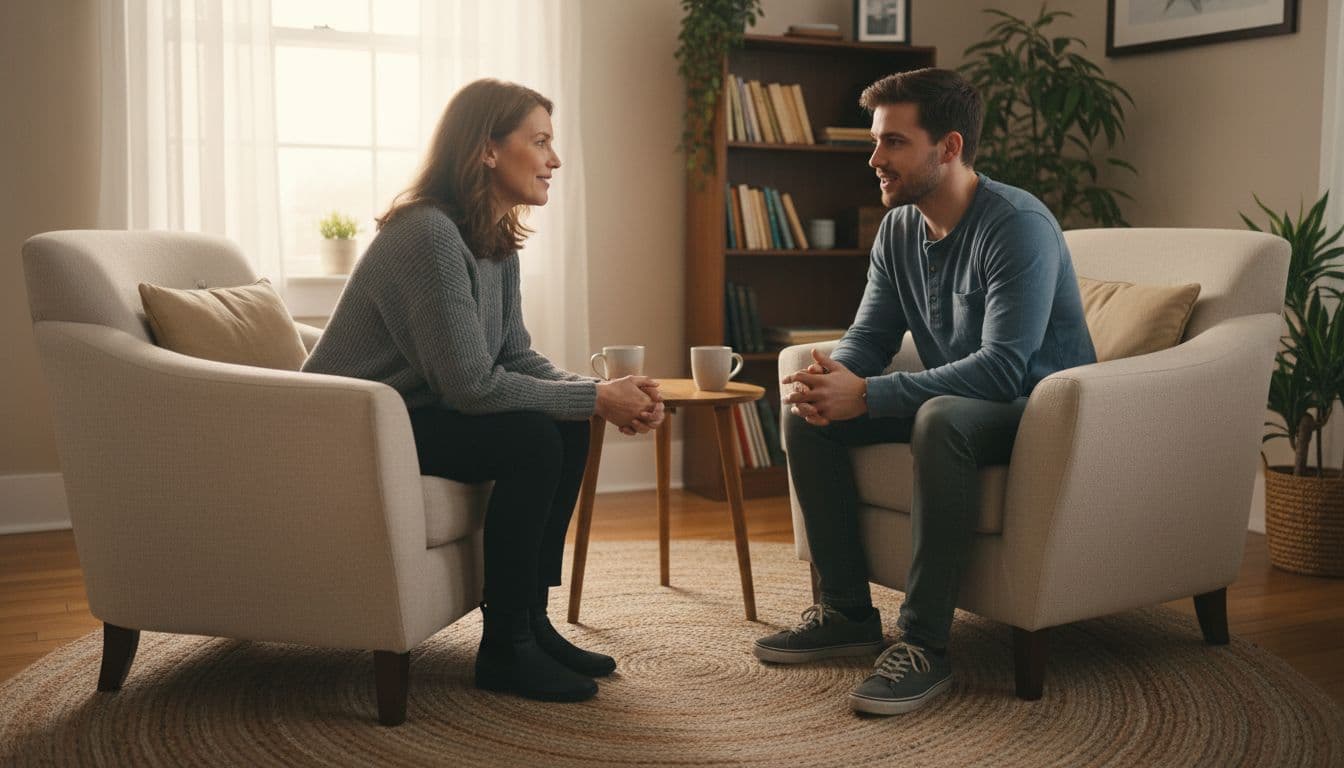
A psychiatrist often needs to:
Read what’s not said. People minimize substance use, panic symptoms, trauma, or suicidal thinking. A skilled clinician notices pauses, contradictions, and shifts in affect, then responds with care.
Handle complex diagnosis. Conditions overlap. ADHD can resemble anxiety. Bipolar disorder can look like depression until you find the history. Medical issues can mimic psychiatric ones too.
Manage medication risk. Prescribing isn’t just “pick an SSRI.” It’s monitoring side effects, interactions, pregnancy considerations, withdrawal, and when symptoms may signal a different diagnosis. These choices also depend on patient preference and prior experiences.
Work inside ethical and legal boundaries. Involuntary holds, duty to protect, documentation standards, and informed consent can’t be offloaded to a chatbot.
There’s also a newer risk: AI itself can trigger or worsen symptoms in vulnerable people, especially when tools encourage paranoid or grandiose ideas. UCSF researchers have discussed a clinically documented case involving AI-associated psychosis in UCSF reporting on AI psychosis concerns. That doesn’t mean AI causes psychosis in most users, but it does show why guardrails matter.
When to seek urgent help (don’t wait for an app)
If you or someone you know is in immediate danger, treat it like a medical emergency. Get urgent, in-person help if there is suicidal intent, psychosis (hearing voices, strong paranoia, loss of reality testing), severe withdrawal, or dangerous agitation.
In practical terms: contact local emergency services, go to the nearest emergency department, or reach out to a local crisis service in your area. If you can, stay with a trusted person until help arrives.
Safety, regulation, and the future: AI-assisted psychiatry, not AI-only care
Even when AI performs well in studies, real-world healthcare adds friction: privacy rules, uneven data quality, bias risks, and accountability. That’s why “replace or not” isn’t the best frame. The more realistic future is a division of labor.

Regulators are also trying to keep up. In March 2026, the FDA’s approach to generative AI tools is still taking shape, and public reporting suggests it’s using early designations and guidance to signal how it may judge risk and evidence, as covered in STAT’s reporting on the RecovryAI designation. Meanwhile, policy discussions focus on guardrails like performance monitoring, transparency, and limits on autonomous behavior, including notes from FDA digital health committee discussions.
So what will shared care look like in practice?
In a typical model, AI handles check-ins, reminders, and symptom graphs. It drafts notes, suggests rating scales, and highlights medication nonadherence. Then the psychiatrist uses that information to make decisions, confirm diagnoses, and build a plan the patient can actually follow.
The uncertainty is real. Some tools will prove useful and safe. Others will fade after poor outcomes. A thoughtful perspective in Translational Psychiatry warns that psychiatric AI can look impressive in early results yet fail during clinical translation, outlined in a cautionary perspective on AI in psychiatry.
The bottom line: AI will reshape workflows, but responsibility still lands on humans.
Conclusion
AI will change how psychiatric care works, especially for tracking, triage, and documentation. At the same time, replacing psychiatrists would require safe judgment under uncertainty, plus accountability, and that’s still human work. The best near-term path is AI-assisted psychiatry, where tools extend care without pretending to be the clinician. If you’re trying an AI mental health app, use it as support, and keep a real care team involved when symptoms get serious.