
A Practical AI Board Reporting Template for Leadership Teams in 2026
Board updates on AI are getting harder, not easier. The stakes are higher, the use cases are broader, and directors want more than a list of pilots and a few optimistic charts.
A strong AI board reporting template gives leadership teams a steady way to show value, risk, control posture, and the decisions that need board attention. In 2026, that structure matters because AI oversight now touches compliance, cybersecurity, data quality, workforce adoption, and capital allocation at the same time.
Why structured AI reporting matters more in 2026
A loose AI update used to pass. It doesn’t now. Boards are asking where AI is in production, who owns it, what it costs, what it returns, and where it could fail.
That shift is tied to the regulatory picture. In 2026, California’s AB 2013 training-data transparency law is in effect, Colorado’s AI Act takes effect on June 30, and California’s automated decision rules begin phasing in. For many firms, the EU AI Act also shapes controls, even if the company is based in the US. There is still no single federal AI law in the US, but that doesn’t reduce board pressure. It raises it, because leaders must track a patchwork of duties and prove they have judgment in place.

At board level, AI is no longer a tech briefing. It’s a business risk and capital issue. That view lines up with WilmerHale’s AI governance playbook for boards and KPMG’s AI governance principles for boards, both of which treat AI oversight as a core board duty rather than an IT side topic.
The practical rule is simple: make the report fast to read, but hard to misunderstand. Directors should know three things within minutes. First, whether AI is creating measurable business value. Second, whether risk is inside the company’s appetite. Third, what management wants from the board now.
Directors don’t need every prompt or parameter. They need a clear view of exposure, controls, results, and the next decisions.
A reusable AI board reporting template leadership teams can adapt
The best template is short, repeatable, and tied to decisions. One page for the headline view, then brief supporting detail. If needed, attach appendices for model cards, audits, or incident logs.
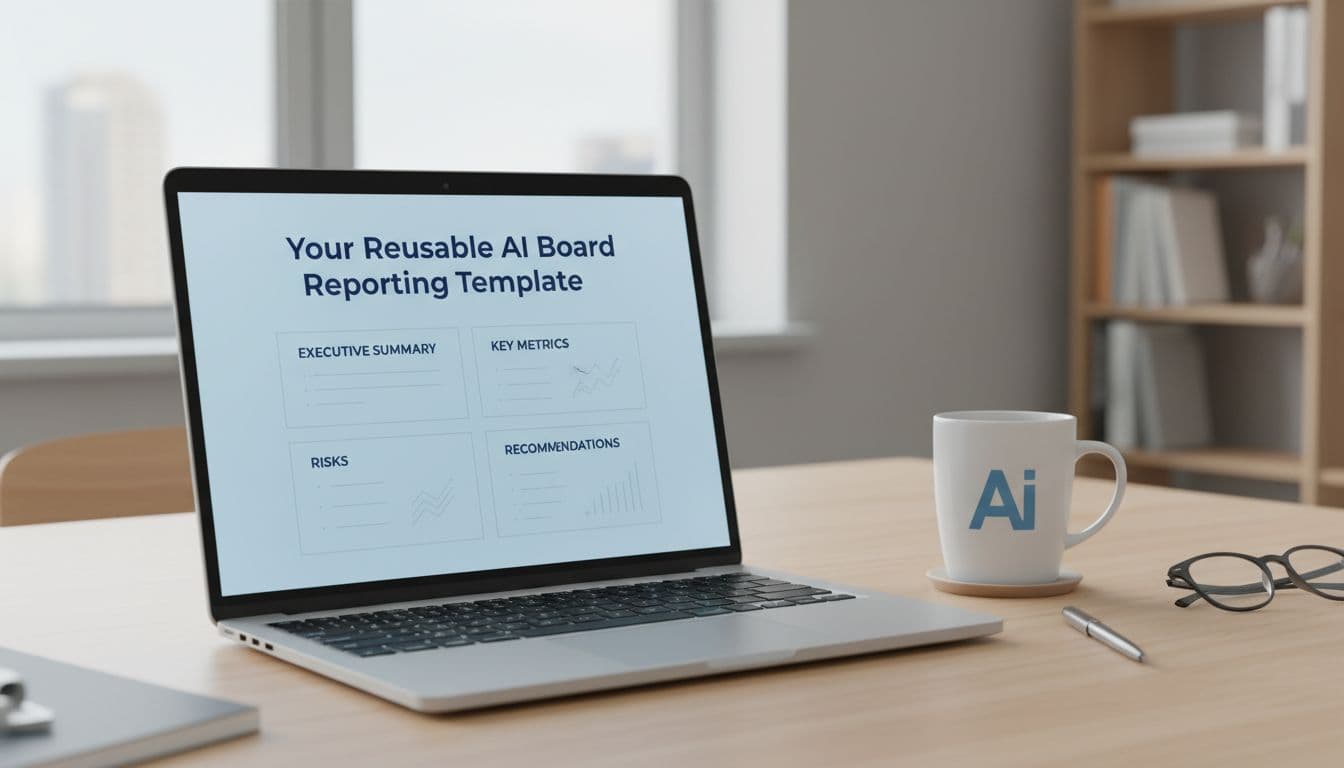
Core template structure
This format works for quarterly board packets, audit committee updates, and executive steering meetings.
| Section | What the board should see | Example contents |
|---|---|---|
| Executive summary | The headline in plain English | Top outcomes, biggest risk, asks for board attention |
| AI portfolio snapshot | Where AI is active and at what scale | Number of live use cases, pilots, retired tools, high-risk systems |
| Business value and ROI | What AI is producing for the business | Revenue lift, cost savings, cycle-time gains, quality improvement |
| Adoption and operating health | Whether people are using it well | User adoption, workflow coverage, training completion, exception rates |
| Governance and compliance | Whether controls match obligations | Policy status, impact assessments, training-data transparency, audit readiness |
| Model and data quality | Whether outputs can be trusted | Drift, hallucination rates, retrieval accuracy, data freshness, data lineage gaps |
| Cybersecurity and vendor risk | Whether systems are protected | Prompt injection tests, access controls, third-party model dependencies, incident status |
| Decisions and next steps | What management needs approved | Budget, risk acceptance, system pause, new use-case expansion |
A good packet also names owners. Every major AI system should have a business owner, technical owner, and risk owner. If one person holds two roles, say so. Boards don’t like orphaned systems.
For an outside benchmark, AILD’s board AI reporting template and AI Safety Hub’s CEO and board AI report card are useful references. They both push toward the same outcome: show business value, unresolved risks, incidents, and the controls that back management’s claims.
Sample board-report language
You don’t need polished theater. You need direct language a director can quote back in the meeting.
“During Q2, 11 AI use cases remained in production and 4 stayed in pilot. Two customer service tools cut average handling time by 18%. One recruiting workflow remains paused because fairness testing found adverse impact outside approved thresholds. No material AI-related cyber incidents occurred. Management requests approval to expand the service tools and retire the recruiting pilot unless remediation succeeds next quarter.”
That sample works because it does four jobs at once. It states scope, value, risk, and a decision. Most weak reports only do one.
When drafting your own version, keep these rules in mind:
- Put the hardest issue on page one. If a model failed, say it early.
- Separate production systems from experiments. Boards care about real exposure.
- Show trends, not a single point in time. A three-quarter view beats a snapshot.
- Tie every claim to evidence you can produce later, especially for audit or litigation.
If you need a broader committee view, Deloitte’s AI board governance roadmap is a solid reference for assigning oversight between the full board, audit committee, risk committee, and management.
Essential risks to highlight in every AI board report
The board doesn’t need a catalog of every possible AI hazard. It does need the few risks that could change business performance, compliance exposure, or trust.
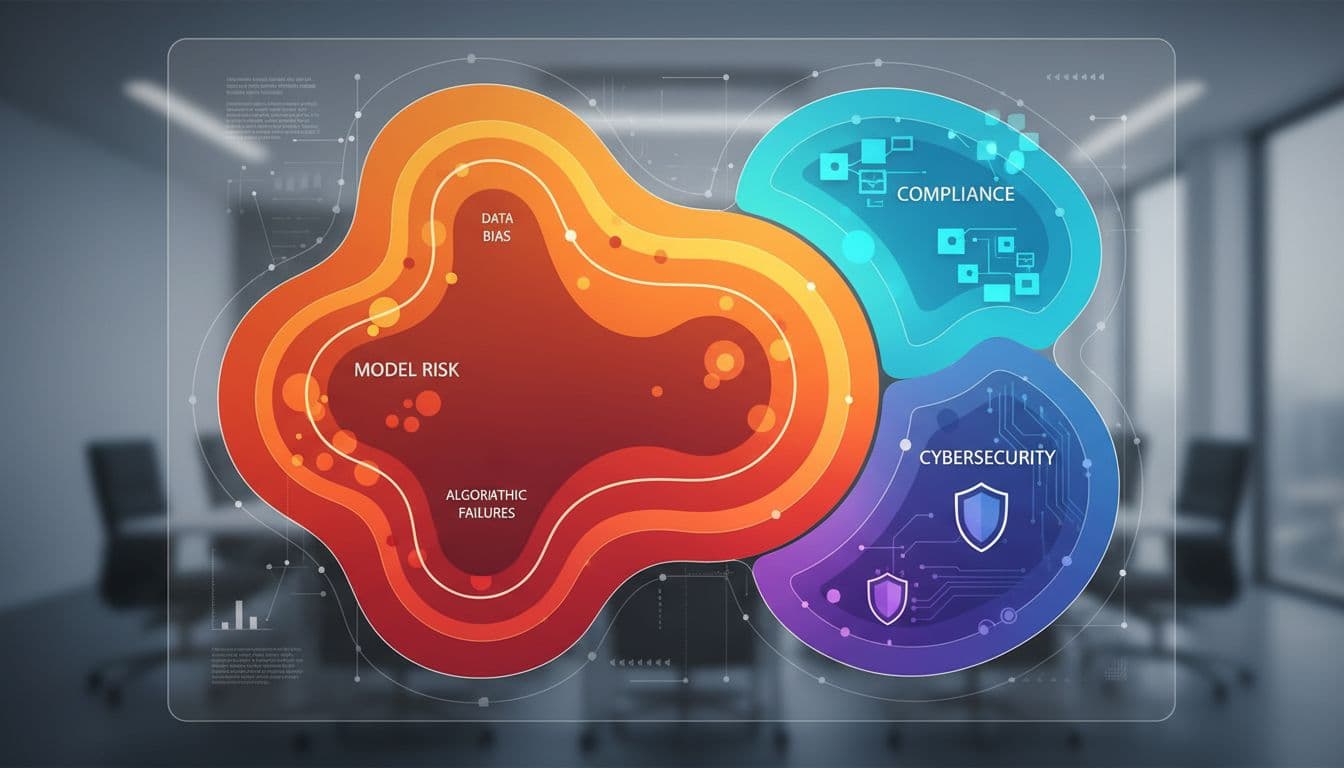
Start with model risk. Report whether the system is stable, whether performance drift is rising, and whether human review catches meaningful errors. If you’re using generative AI, include hallucination rates, escalation rates, and any limits on autonomous action. Agentic AI deserves its own line item because autonomy changes the risk profile.
Next, cover compliance and responsible AI oversight. In 2026, that means more than a policy memo. Boards want to know which systems fall into high-risk categories, whether impact assessments are complete, how training-data disclosures are handled, and whether explainability standards match the use case. For teams using the NIST structure, Aprio’s board-level overview of the AI risk management framework is a clear shorthand.
Then address data quality. Many AI failures start upstream. If source data is stale, biased, incomplete, or poorly governed, a model can look healthy while giving weak advice. Report data freshness, lineage gaps, access issues, and any critical dependency on third-party data.
Finally, treat cybersecurity as part of AI reporting, not a separate memo. Boards should see prompt injection findings, model access controls, data leakage tests, and vendor concentration risk. If a third-party model or API is in the loop, spell out what happens if that vendor changes terms, performance, or security posture.
How internal teams and vendors should adapt the same template
The same board reporting structure works for internal AI programs and for vendors presenting performance to client boards. The lens changes, but the packet doesn’t.
Internal teams should focus on the full enterprise picture. That includes shadow AI discovery, policy exceptions, portfolio spend, adoption by function, and where human accountability sits. A chief of staff or board liaison can often improve the report by cutting product jargon and keeping only decision-grade detail.
Vendors need a narrower, more evidence-based version. Client boards care less about your roadmap and more about the service they are buying. They want to see uptime, output quality, incident history, subcontractor exposure, data handling, audit rights, and whether your controls fit their policy framework.
A few adjustments help both sides:
- Internal reports should roll up across all active AI use cases, not only the flagship program.
- Vendor reports should define scope tightly and separate what the vendor controls from what the client controls.
- Both should include one red or amber issue if one exists. A perfect status deck can damage credibility.
- Both should state the next decision clearly, because boards are there to govern, not to admire dashboards.
That balance matters. A board packet is not a pitch deck. It’s a record of management judgment.
Conclusion
A board report on AI works when it makes value and risk visible at the same time. If directors can see outcomes, control gaps, ownership, and the next decision on one read, the template is doing its job.
In 2026, AI oversight is part of ordinary board work. The teams that report clearly will make better decisions, respond faster to issues, and earn more trust when the hard questions come.