
Agentic AI Governance Checklist for Internal Teams in 2026
Agentic AI changes the risk profile fast. Once a system can choose steps, call tools, and write back to company systems, a bad decision can turn into a real business action.
That is why agentic AI governance can’t be treated like chatbot policy with a new label. Internal teams need controls that fit autonomous or semi-autonomous behavior, not just text generation.
The good news is that the building blocks are familiar. Roles, approvals, logs, access limits, and monitoring still do the work. The difference is that they need to sit inside the agent’s action path, not beside it.
This checklist shows how to do that before an agent moves from pilot to production.
Why agentic AI needs a different rulebook
A standard LLM chatbot responds to a prompt. An agent can plan, call tools, read fresh data, and take action. That shift matters more than model size or brand.
The usual chatbot risks still exist. Hallucinations, bias, and data leakage are still on the board. However, agentic systems add execution risk. A wrong answer can now trigger a ticket change, a refund, a file update, or an API call.
| Area | Standard chatbot risk | Agentic AI risk |
|---|---|---|
| Output | Bad answers or unclear advice | Bad answers plus real-world side effects |
| Data | Sensitive text appears in replies | Sensitive data can be retrieved, copied, or written out |
| Access | The user sees a response | The agent can call tools, APIs, and internal systems |
| Errors | Misinformation | Misinformation that causes action |
| Accountability | Review the generated text | Review the whole action chain |
That last line is the key. A chatbot can mislead a person. An agent can mislead a workflow.
By 2026, most enterprise teams already know that policy alone is not enough. They need controls that match the system’s ability to act. For a useful architecture lens, see AWS guidance on agentic AI governance, which covers governance models, access control, and audit requirements at scale.
Build the governance model before the first agent ships
Strong governance starts with ownership. If nobody owns the risk, every review becomes a delay, and every delay becomes a workaround.
For most enterprises, a hybrid model works best. A central team sets policy and control standards. Product, security, and operations teams apply those rules in the systems they run. That keeps the model consistent without forcing every decision through one committee.

A solid governance team usually includes these roles:
- A business owner who accepts the use case and the risk.
- An AI governance lead who maintains policy and review standards.
- Security and platform engineers who enforce access, logging, and runtime controls.
- Legal and compliance counsel who map the use case to regulatory duties.
- Operations or process owners who handle production monitoring and incident response.
The team also needs one intake path for every new agent. When requests come in through email, chat, and side meetings, controls break down. A simple workflow works better:
- Capture the use case and business goal.
- Assign a risk tier.
- Review data access and tool access.
- Approve the design.
- Re-certify after major changes.
That process does more than slow things down. It creates a paper trail, and in 2026 that matters. Organizations are increasingly aligning their programs with NIST AI RMF, ISO/IEC 42001, and sector rules that expect documentation, oversight, and repeatable controls.
Mayer Brown’s overview of agentic AI accountability and impact assessments makes the same point. Existing AI governance programs can adapt, but they need documented risk review and evidence of control.
Define risk tiers and review gates
Not every agent deserves the same level of scrutiny. The right tier depends on the action, the data, and the blast radius. A clever demo can still be low risk if it cannot touch anything sensitive.
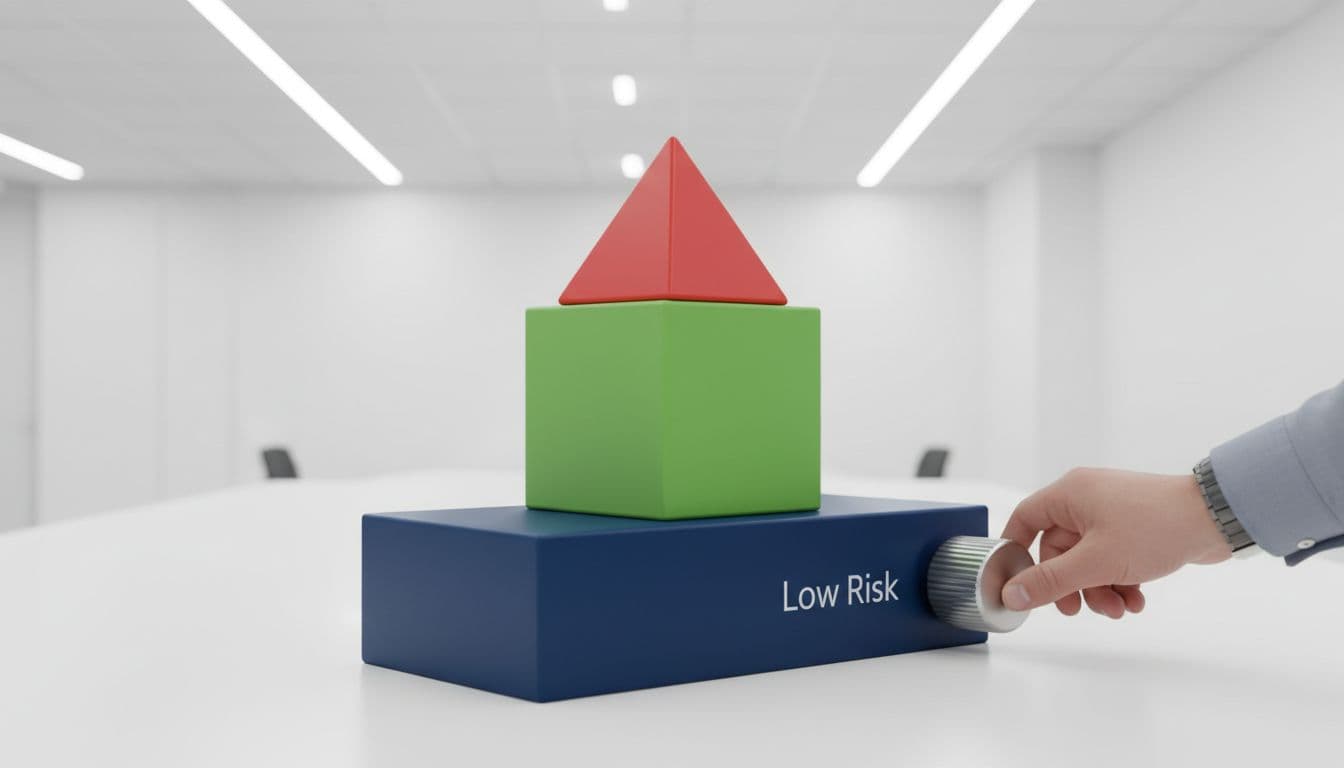
Use a simple tier model like this:
| Tier | Typical use | Required control | Evidence |
|---|---|---|---|
| Low | Drafting internal text, summarizing tickets, answering policy questions | Read-only access, no external writes, basic logging | Prompt and response logs, owner approval |
| Medium | Updating CRM notes, drafting customer emails, creating internal tickets | Limited tool access, human review before write actions, approval thresholds | Tool-call logs, reviewer sign-off |
| High | Payments, access changes, HR actions, legal or customer-facing sends | Pre-approval, strict least privilege, sandbox testing, mandatory human decision | Full audit trail, test results, exception records |
The more the agent can change, the more gates you need. Design review should happen before build. Security review should happen before launch. Legal and compliance review should happen before any system touches regulated data. After launch, change review should trigger when you add a tool, raise permissions, or switch models.
A simple rule helps teams stay honest:
If the agent can make a real business change, a person needs to sign off before that change happens.
Medium-risk systems often fail because teams treat them like low-risk chatbots. That is a mistake. An agent that can draft a refund email, update a record, and send the message crosses a very different line from a bot that only summarizes policies.
Set hard boundaries on tools, data, and actions
Prompts are useful, but they are not controls. If the agent has permission to do something, the prompt will not stop it from trying. Real boundaries live in identity, policy, and runtime settings.
Start with tool allowlists. Give each agent access to only the tools it needs. If the use case does not require a payment API, do not connect one. If it does not need to write to production systems, keep write access out of scope.
Then lock down identity. Each agent should have its own service identity, its own token scope, and its own environment. Shared accounts create confusion during incidents and make it hard to prove who did what.
Data access needs the same discipline. Agents should only see approved data classes, with redaction where needed. Retrieval should stay inside a trusted boundary. If a source is not fit for a human to use, it is usually not fit for an agent either.
Other controls belong at the action layer:
- Limit the number of steps an agent can take in one run.
- Set timeouts and spend limits for API use.
- Require human approval before external sends or write actions.
- Keep a kill switch that ops can use fast.
- Use sandboxed environments for testing and exploration.
- Separate read, draft, and write permissions.
If your team uses MCP servers or other tool brokers, treat them like production services. Register them, review them, and assign owners. That is one reason AWS’s guidance on agentic systems talks about agent, tool, and registry management in the same control plane.
If a control lives only in a prompt, treat it as a request. If it lives in identity and policy, treat it as a control.
Make every action traceable
Auditability is where many agent projects fall apart. Teams save the final answer, but they lose the chain of action that led there. When something goes wrong, that gap becomes a real problem.
A usable log should show the full path. It should capture the user request, the system prompt version, the model version, the agent’s goal, the tools it called, the data it touched, the output it produced, and the final action. If a human approved a step, that approval needs to be in the record too.

Good logs are tamper-evident and centralized. They should flow into a system the security and compliance teams already use, such as a SIEM or audit store. Retention should match business and legal requirements, not the model team’s preference.
Here are the fields that matter most:
- Who started the run.
- Which agent version acted.
- Which tools were called.
- What data sources were read.
- What writes or sends were attempted.
- Which approval gates were passed or blocked.
- What exception, rollback, or override happened.
Logs also help with tuning. If the agent keeps failing at the same step, the team can see whether the problem is access, prompt design, tool schema, or policy. Without that visibility, every fix becomes guesswork.
A clean audit trail also shortens legal review. Counsel does not need a story. They need evidence.
Put monitoring and red-teaming on a calendar
Static approval is not enough. Agents change behavior as models change, tools change, and prompts change. Monitoring has to keep up.
Start with operational metrics. Track unauthorized tool attempts, blocked data access, human override rates, failed runs, retry loops, and unusual spend. Those signals tell you where the guardrails are too loose or too strict.
Then test the failure modes that matter most:
- Prompt injection hidden in emails, docs, or tickets.
- Attempts to call blocked tools or unauthorized endpoints.
- Data extraction through multi-step requests.
- Runaway loops that repeat the same action.
- Policy bypass through indirect prompts or chained agents.
- Output that looks safe but triggers a harmful side effect.
Teams often map this work to NIST AI RMF and ISO/IEC 42001 because those frameworks give a shared language for risk, controls, evidence, and review. In 2026, that shared language matters more than ever. Regulators and auditors care about repeatable process, not ad hoc reassurance.
The review cadence should match the risk. Low-risk agents may need monthly monitoring reviews. Medium-risk agents often need quarterly red-teams. High-risk agents should be tested before launch, after major changes, and on a fixed schedule.
A good practice is to run one tabletop exercise per quarter. Use a realistic incident. For example, an agent starts sending the wrong customer data to the wrong team, or it begins to call a tool after a malformed instruction. The exercise should end with a clear owner, a rollback path, and a logged decision.
A practical checklist for internal teams
Use this table as a launch gate for each new agent. If a row has no owner or no evidence, the control is not real yet.
| Control area | What to implement | Owner | Evidence |
|---|---|---|---|
| Governance charter | Define scope, roles, and approval authority | AI governance lead | Approved charter, named owners |
| Inventory and tiering | Register every agent and assign a risk tier | Product owner | System inventory, tier record |
| Access control | Scope tools, data, and write permissions | Security and platform | IAM policy, tool registry, test results |
| Review gates | Require design, launch, and change approvals | Governance committee | Signed approvals, exception log |
| Logging | Capture inputs, tool calls, outputs, and actions | Engineering | Central logs, retention policy |
| Monitoring | Track overrides, failures, and unusual actions | Ops and security | Dashboards, alerts, review notes |
| Incident response | Define rollback, kill switch, and escalation steps | Security and operations | Playbook, tabletop results |
| Recertification | Re-check controls after model or tool changes | Business owner | Re-approval record, updated risk review |
The biggest benefit of this checklist is clarity. Everyone can see what has to exist before the agent is allowed to act. That keeps debates short and evidence-focused.
Common mistakes that weaken governance
A lot of teams get the policy right and the controls wrong. The gaps are easy to spot once you know where to look.
- Using chatbot policy for an agent that can take actions. A safe prompt does not replace permission scoping.
- Letting the same team build, approve, and monitor a high-risk agent. That removes the second set of eyes that catches mistakes.
- Giving broad write access before logging works. If you cannot trace the action, you cannot defend it.
- Treating pilot systems as exceptions. Pilots often become production tools faster than anyone expects.
- Skipping recertification after a model, prompt, or tool change. That is when old approvals stop matching reality.
- Relying on manual review without a rollback path. Human review helps, but it does not fix a broken process after the fact.
One more issue shows up often in enterprise settings. Teams keep the agent inside a sandbox, then connect it to live systems without redoing the review. That shortcut saves a week and creates months of cleanup.
The fix is simple, though not easy. Tie every new action to a control, a named owner, and a log record.
Conclusion
Agentic systems ask for a different kind of control. The risk is not only what the model says, it’s what the model can do. That is why the strongest programs in 2026 treat governance as part of the runtime, not a document on a shelf.
The checklist is straightforward. Set ownership, tier the risk, lock down tools and data, log every action, and monitor the system after launch. If you can prove those controls work, internal teams can move faster with less guesswork.
That is the real test for agentic AI governance. When an agent acts, the organization should know who approved it, what it touched, and how to stop it if things go wrong.