
AI Procurement Policy Template for Internal Teams in 2026
Buying AI in 2026 can feel deceptively easy. A team leader can add a chatbot, note taker, or model API in one afternoon, yet the real risk often shows up later, in retained prompts, weak contracts, or outputs that sound right and are wrong.
That is why internal teams need one shared rulebook. A solid AI procurement policy template helps procurement, legal, security, and business owners make the same decision from the same facts.
Why 2026 needs a stricter AI buying policy
Traditional software usually does what it is coded to do. AI systems are different because they can improvise, drift, and fail in ways users miss. A vendor may also rely on upstream models, hidden subprocessors, or broad rights to store and reuse your data.
Public sector rules are moving in that direction. California’s March 2026 order adds new expectations for AI sellers, including safety, civil rights, and risk certifications, as outlined in this state AI procurement order analysis. At the federal level, draft GSA terms also push disclosure, data rules, and vendor accountability, summarized in Wiley’s review of the delayed GSA AI terms.
For private companies, the message is simple. If a tool can shape content, decisions, records, or customer interactions, it needs more than a price review. It needs policy, evidence, and a contract that still works when the model changes. Older SaaS checklists often miss that point because they were not built for prompt data, probabilistic output, or generative AI.
A practical AI procurement policy template
Use the draft below as a starting point, then tailor it to your industry, data profile, and approval structure.
Review this draft with legal, procurement, and security teams before you adopt it.
Core policy language
- This policy applies to [Company Name], [business units], and all third-party AI tools, embedded AI features, model APIs, copilots, agents, and generative AI services.
- The policy owner is [team/role]. The review cycle is every [6/12] months, or sooner after a major legal or vendor change.
- A requester must document the business purpose, intended users, data types, decision impact, and fallback process if the tool fails.
- No team may buy, pilot, connect, or renew an AI tool until procurement, security, and legal complete the required review tier.
- High-impact uses, including HR, finance, legal advice, healthcare, safety, and customer decisions, require a human-in-the-loop control before any final action.
Data, model, and output rules
- Vendors must disclose whether they store prompts, uploads, outputs, logs, or metadata, and how long they keep each category.
- The default rule is “no training on our data.” Any exception needs written approval from [approver] and contract language that limits scope, duration, and reuse.
- Any approved tool must identify all subprocessors and foundation model providers that may handle our data.
- The tool must support deletion, export, access controls, and region-specific data handling where required.
- For generative AI, the business owner must define acceptable use, prohibited use, and a review step for outputs that could contain hallucinations, unsafe advice, or copyrighted material.
Security, fairness, and contract rules
- Security must review identity controls, encryption, logging, admin roles, incident response, and current assurance documents such as SOC 2 or an equivalent report.
- If the AI could affect people, the requester and vendor must provide bias and fairness testing details, known limits, and a path for appeal or correction.
- The vendor must provide audit logs, model or feature change notices, and version history where output quality may shift.
- Contracts must cover confidentiality, data processing terms, breach notice within [X] hours, deletion on exit, IP ownership for customer inputs and outputs, and cooperation with audits or regulator requests.
- Procurement may pause or end use if the vendor changes data practices, fails a control, or refuses a material contract clause.
Keep the policy itself short. Put the intake form, security questionnaire, and approved clause library in appendices so teams can move faster without weakening review.
If you want another baseline, FairNow publishes an AI procurement policy template that is useful for comparison.
A concise approval workflow that internal teams can follow
A good policy should speed up routine reviews, not bury teams in forms. The easiest way is to tier requests by impact and keep the path short. Tier 1 can cover public data and no decision impact. Tier 2 can cover internal business data. Tier 3 should cover sensitive data, regulated records, or use cases that affect people.
- The requester submits a short intake with the use case, users, data, vendor name, and desired go-live date.
- Security and IT review the data flow, access model, integrations, and minimum controls.
- Legal and privacy review the contract, training terms, retention, subprocessors, and regulatory fit.
- The business owner or risk lead approves the use case, plus any human review controls.
- The team runs a limited pilot, records issues, and moves to production only after sign-off.
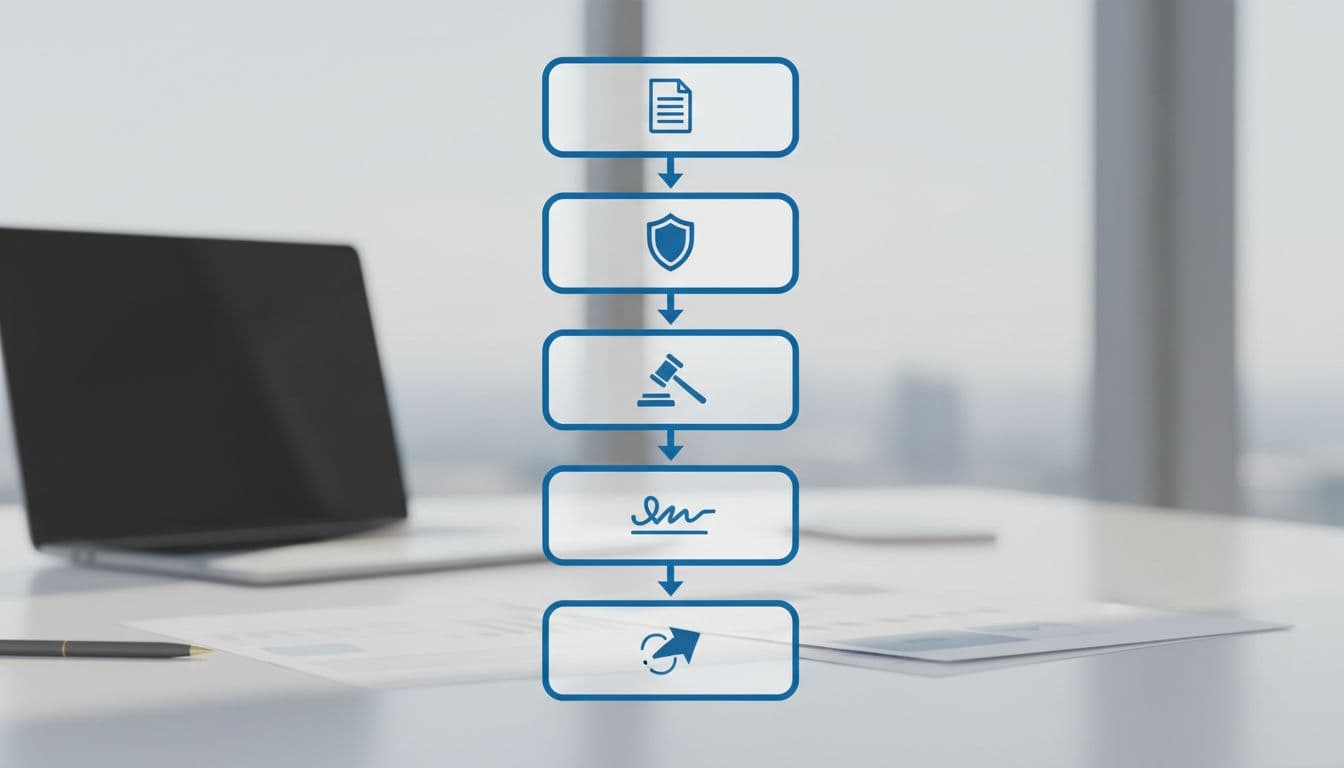
Set clear time targets as part of the workflow. For example, a low-risk note-taking tool might move in five business days, while an AI tool for hiring or claims decisions should trigger a deeper review and executive approval.
Vendor checklist and contract clauses to insist on
Before you sign, ask for proof, not promises. Formiti’s AI procurement risk framework is a good reference when teams need shared language for model and supplier risk.
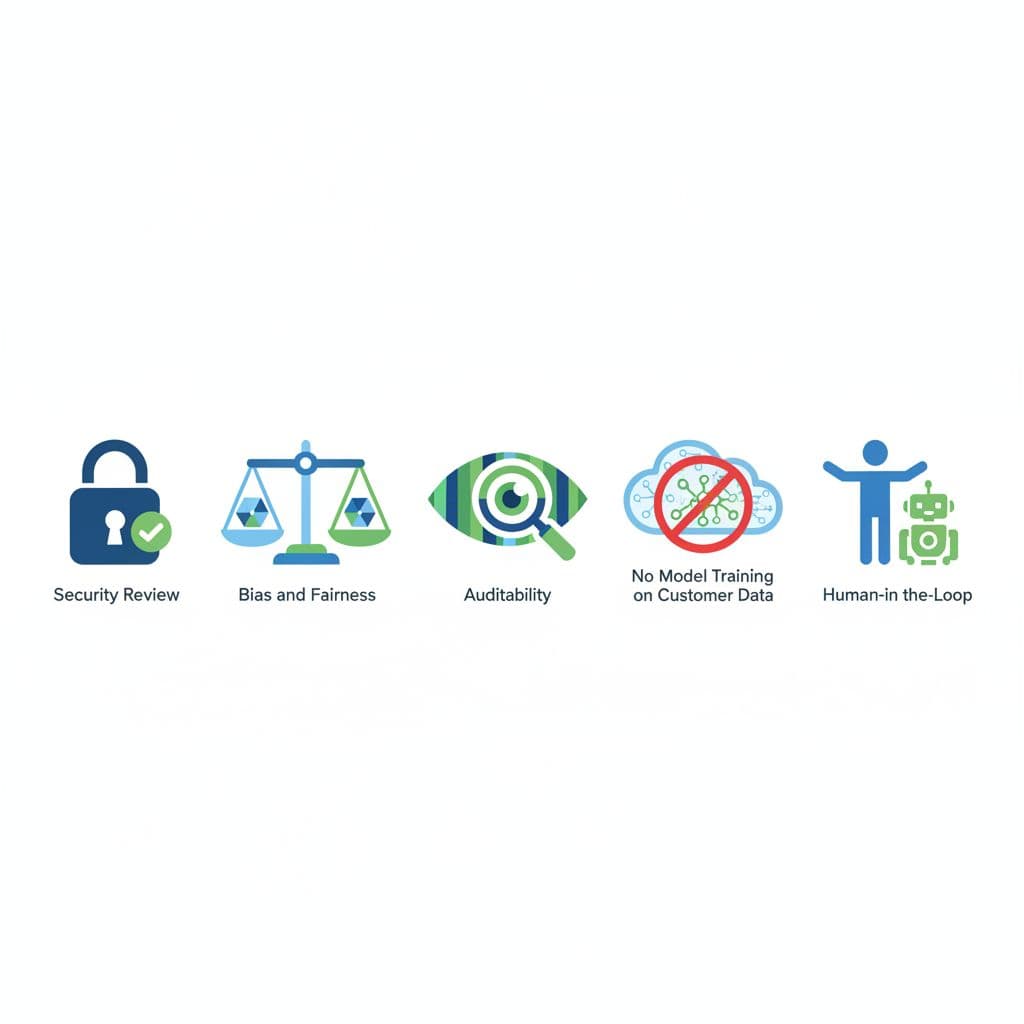
Use this short checklist:
- Ask whether the product uses generative AI, a rules engine, a third-party model, or a mix of them.
- Require written retention schedules for prompts, files, outputs, logs, and backups.
- Require a written statement on model training, with a default ban on training shared models with customer data.
- Request security evidence, including recent testing, access controls, tenant isolation, and breach handling.
- Ask how the vendor measures hallucination risk, flags low-confidence output, and routes risky work to human review.
- Request bias testing and fairness documentation when the tool touches hiring, lending, insurance, pricing, education, or customer service outcomes.
- Require auditability, including logs, model version notices, and the ability to reconstruct key outputs.
- Add contract language for subprocessor notice, change management, deletion rights, regulatory cooperation, and exit assistance.
Contract terms should also require notice before a material model change. A model swap can alter output quality, IP risk, and processing location overnight. A vendor that cannot answer these basics is telling you something, and the gap may be weak governance, product immaturity, or both.
The best policy removes guesswork
AI is easy to buy and hard to govern after the contract is signed. That is why the best AI procurement policy template is plain, short, and strict on the points that matter most, data use, human review, audit trails, and contract rights.
If your teams can explain what the tool does, what data it touches, who checks the output, and how you can exit, the policy is doing its job.